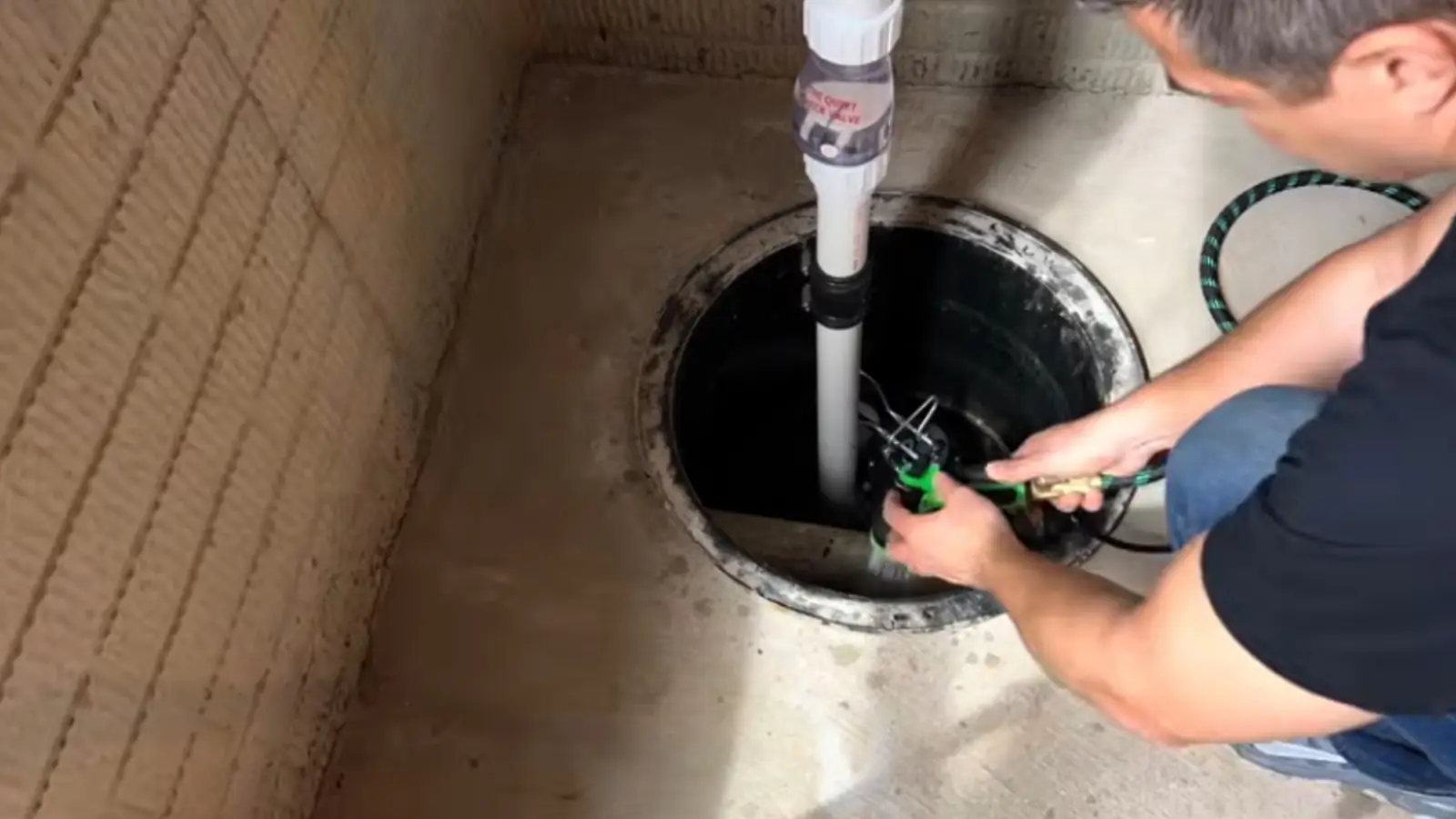
A sump pump that fails during a heavy rain can flood a basement in hours. Our line is open 24/7 and storms rarely respect the calendar. If water is rising in the pit, tell the plumber right away so we can prioritize your call.
Make sure the pump is plugged in and the breaker is on, since a tripped GFCI is the simplest cause. If the float is stuck, lift it gently and see if the pump starts. Move valuables off the floor and keep out of standing water near outlets.
Sump pump emergency: common failures
Does not start
A tripped breaker, a failed switch or a dead motor.
Runs constantly
A stuck float, a bad check valve or a pit that is inflowing heavily.
Runs but moves little water
A clogged intake, a failed impeller or a blocked discharge line.
Loud or rattling
Debris in the impeller or a worn motor.
Cycles too often
Check valve failing so water flows back into the pit.
Discharge freezing
An exposed discharge line blocks in cold weather.
Repair, replace or back up
A pump that is eight to ten years old and acting up is usually cheaper to replace than to repair. A failed float switch or check valve is a quick repair. We also talk about battery backup systems, which keep the pit pumping when the power goes out, often at the exact time a storm hits.
For sealed pits, our blog guidance on sump pump cover installation covers why a sealed lid helps with odor and radon concerns. We install lids as part of a pit upgrade.
| Option | Best for | Note |
|---|---|---|
| Repair | Pump under 7 years with a minor fault | Fast and low cost |
| Replace | Older pump or failed motor | More reliable |
| Battery backup | Homes in areas with storm power outages | Adds protection when power fails |
| Water-powered backup | Homes on municipal water with enough pressure | Check local rules |
| Sealed cover | Odor and moisture control | Seals the pit |
Why basements and crawlspaces get wet here
Much of Union County sits on Piedmont clay soils that drain slowly. When heavy rain saturates the ground, water pressure builds against foundation walls and pushes up through floors and cracks. Many Indian Trail homes are slab or crawlspace, but those with basements or sump pits depend on a pump to move that water away.
Discharge matters too. The line should carry water well away from the foundation, and local rules may restrict where discharge goes. Do not tie a sump discharge into the sanitary sewer, since it overloads the system and is generally not allowed.
Cost factors for sump pump repair
Water damage from a failed sump pump is often excluded unless you have a specific water backup endorsement. Ask your agent before the rainy season.
Testing your pump before the storm
The best time to test a sump pump is a dry week. Lift the float or pour a bucket of water into the pit and watch the pump start, empty the pit and shut off. Listen for grinding, rattling or a motor that hums without moving water. Look at the discharge outside to confirm water is leaving the house and flowing away from the foundation.
Check the power. A pump on a GFCI outlet can trip and stop without warning, and many owners never notice. Plug a lamp into the same outlet to confirm it has power, and press the test and reset buttons on the outlet.
Why pumps fail
Pumps fail from age, from debris in the pit, from switches that stick and from running too often. A pump that cycles constantly because of a failed check valve works itself to death. A pump set in a pit with no gravel or with silt collecting around it can clog. Heat and humidity also shorten life.
Replacing the pump on a schedule, before the storm that finds out its weakness, is cheaper than a flooded basement. Many owners choose to replace a pump around eight years, or sooner if it runs a lot.
Rules that affect your pump
Sump systems involve electrical safety and discharge rules. Outlets near wet locations follow the National Electrical Code (NEC) requirement for ground-fault protection, which is why a tripped GFCI is the first thing to check. Discharge should go outdoors and not into the sanitary sewer, and Union County Building Code Enforcement can answer questions about changes to your plumbing.
Ejector pumps and basement bathrooms
A sump pump handles groundwater. An ejector pump handles sewage from a basement bathroom or laundry that sits below the sewer line. They look similar and are not interchangeable. An ejector sits in a sealed pit, grinds or passes solids and pushes waste up to the sewer line. A failed ejector backs sewage into the basement, so treat it as urgent.
Signs of trouble include slow draining in the basement bath, gurgling, a sewage smell near the pit or a pump that runs without moving waste. Do not use the fixtures if the alarm sounds or the pit is full. We test the pump, check the float and the check valve and replace the unit when needed.
Sump pump questions
Do you handle sump pump repair emergencies at night or on weekends in Indian Trail?
Yes. The 24/7 line is open. Tell us how fast the pit is filling and we will prioritize.
How long should a sump pump last?
Often seven to ten years, depending on use and conditions.
Do I need a battery backup?
If outages are common in storms, a backup gives protection. We can size one.
Where should the discharge go?
Away from the foundation, onto the lawn or a proper drain. Never into the sanitary sewer.
Do you serve Monroe?
Yes. See the Monroe page.
Can you test my pump?
Yes. We fill the pit and watch the float and pump cycle.