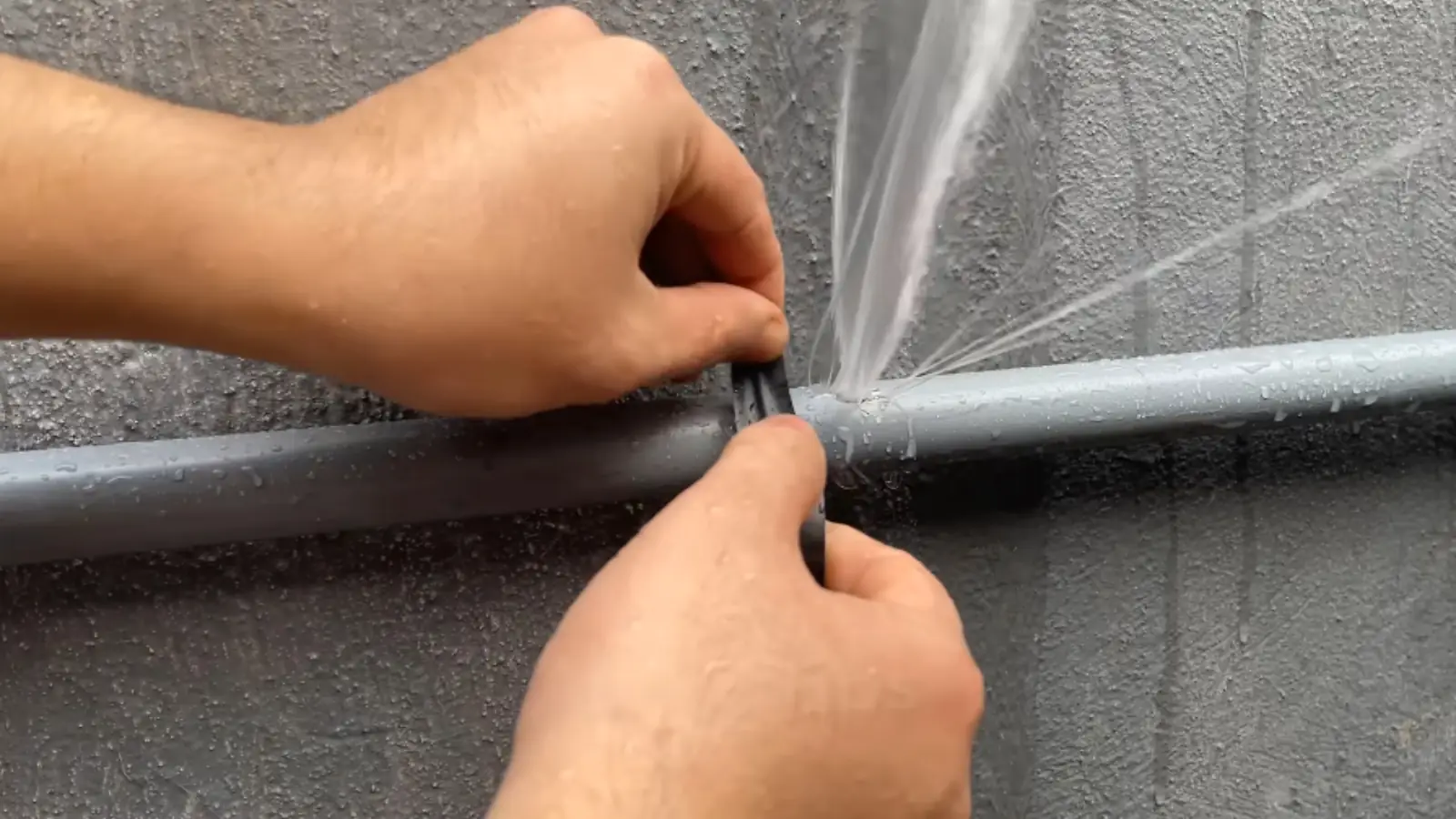
When a pipe bursts, every minute adds water damage. Call the 24/7 line now. While you do, find the main shutoff valve and turn it clockwise until it stops. Then open a faucet at the lowest level of the house to drain the line, and turn off the water heater power or gas so the tank does not run dry.
If water is near outlets, a panel or a ceiling light, stay out of that room and switch off the breaker only if you can reach it dry. Move valuables and furniture out of the wet area and photograph the damage for your insurer.
What to do in the first ten minutes
Shut off the main
Turn the main valve clockwise. If you cannot find it, the shutoff at the meter works.
Drain and isolate
Open the lowest faucet to relieve pressure and let water in the pipes drain out.
Kill the heater
Switch off an electric heater at the breaker or set a gas heater to off so it does not heat an empty tank.
Protect and document
Move belongings, soak up standing water and take photos before cleanup.
Then call us. A plumber can find where the pipe failed, cut out the damaged section and restore your water, often the same day when parts and crews are available.
Why pipes burst
A hard freeze is the classic cause. Water expands as it turns to ice, and the pressure splits the pipe, usually in an unheated crawlspace, an attic, an exterior wall or a garage. The leak often appears after the thaw, when the ice melts and water pours through the split.
Other causes include high water pressure, a failed fitting, a corroded section on older galvanized pipe or a nail or screw driven into a line during renovation. A pressure check is part of any good burst pipe repair, since high pressure raises the odds of a repeat.
Frozen split
A long split along the pipe, often in a crawlspace, garage wall or attic supply line.
Failed fitting
A coupling or valve that lets go under pressure, often at a spot that looked fine.
Corroded section
Older galvanized or aged copper that thins and ruptures. Often a sign other sections are close.
Pressure spike
Water above safe pressure stresses every joint in the house. A regulator corrects it.
Puncture
A fastener or drill bit through a line during remodeling.
Repair methods
We cut out the failed section and replace it with new pipe and fittings suited to the existing system. PEX, copper and CPVC each have joining methods, and we match them to what you have. If the damage covers several areas, we explain whether a larger repiping project saves money over spot repairs.
After the repair we pressure test, restore water slowly and check for hammer and hidden drips. We also show you where the shutoffs are and how to find them next time.
Freeze protection for Union County homes
North Carolina Piedmont winters swing between mild days and hard overnight freezes, which catches homes off guard. Exposed lines in garages, crawlspaces and exterior walls are the usual casualties, and many homes built in the growth since 1990 have supply lines running along those exterior surfaces.
On a cold night, open cabinet doors under sinks on exterior walls and let a faucet drip. Disconnect and drain hoses, and know where your main shutoff is. These small steps cost nothing and prevent most freeze bursts.
Cost factors for burst pipe repair
Sudden pipe bursts are commonly covered by homeowners insurance for the resulting water damage. Call your carrier right away, document everything and keep the failed section if you can.
After the repair
Once the pipe is fixed, we restore water slowly and check for leaks. Open each faucet to release trapped air and flush any debris. If walls or ceilings were wet, dry them quickly with fans and dehumidifiers to prevent mold. Mold can begin to grow within a couple of days in damp materials, so quick drying matters.
Save the damaged section of pipe if you can, and keep your photos and the plumber's report. Your insurer may want them. Ask us for a written description of the failure and the repair.
Reducing the odds of a repeat
Insulate exposed lines, fix pressure problems and replace pipe that shows corrosion or repeated pinholes. A pressure gauge on a hose bib shows your house pressure at a glance. Pressure above about 80 psi is generally considered high, and a regulator brings it into a safe range.
Codes and sources for this repair
Repairs are made to the North Carolina State Plumbing Code, which adopts the International Plumbing Code (IPC) with state amendments. Union County Building Code Enforcement is the local permit authority, and a like-for-like repair of a failed section is normally treated differently from a new run of pipe. The shutoff steps above follow standard guidance that water, power and gas should be isolated before cleanup.
Copper, cracked and leaking pipe repairs
Not every pipe failure is a burst. Copper can pinhole from the inside, joints can weep and a pipe can crack where it was dented or stressed during construction. A pinhole leak sprays a fine jet and a crack drips steadily. Both can ruin drywall and flooring if ignored.
For copper, we cut out the failed section and install new pipe with fittings or solder, depending on the system. For CPVC and PEX, we use the joining method that matches the product. A temporary clamp can slow a leak until help arrives, but it is not a repair. Drain pipe leaks, which show up only when a fixture runs, are repaired with new sections or fittings once the water is off.
Burst pipe questions
Do you handle burst pipe repair emergencies at night or on weekends in Indian Trail?
Yes. The line is open 24 hours a day. Shut off the main first, then call. We will guide you while we dispatch.
How do I find my main shutoff?
Look near where the water line enters the house, at the water heater or at the meter box near the street. A wheel or lever handle turns it off.
Should I turn off the electricity?
Only if you can reach the panel without standing in water. If water is near outlets or the panel, stay clear and tell us.
Will the water damage be covered by insurance?
Sudden bursts are often covered. Ask your carrier about your policy and report quickly.
Do you cover Monroe and nearby towns?
Yes. See the Monroe page.
Can you prevent frozen pipes?
We can insulate exposed lines and reroute vulnerable ones. Dripping a faucet and opening cabinets on cold nights also helps.