Water in a basement or crawlspace rarely fixes itself. It rises with rain, damages finishes and feeds mold. This is mostly planned work, but when water is rising now, call our 24/7 line and read our sump pump repair page first.
Before any work, find the source. Water from a leaking pipe is a plumbing issue. Water that comes in with rain is a drainage issue. They need different fixes, and mixing them up wastes money.
Where basement water comes from
Hydrostatic pressure
Saturated soil pushes water through the floor and wall joints.
Poor exterior grading
The ground slopes toward the house and rain runs to the foundation.
Gutters and downspouts
Overflowing or short downspouts dump water at the walls.
Cracks and cove joint
The floor and wall joint is a common entry point.
Plumbing leaks
A supply or drain leak mimics rain intrusion.
Condensation
Humid air on cool walls leaves moisture without any leak.
Solutions that match the cause
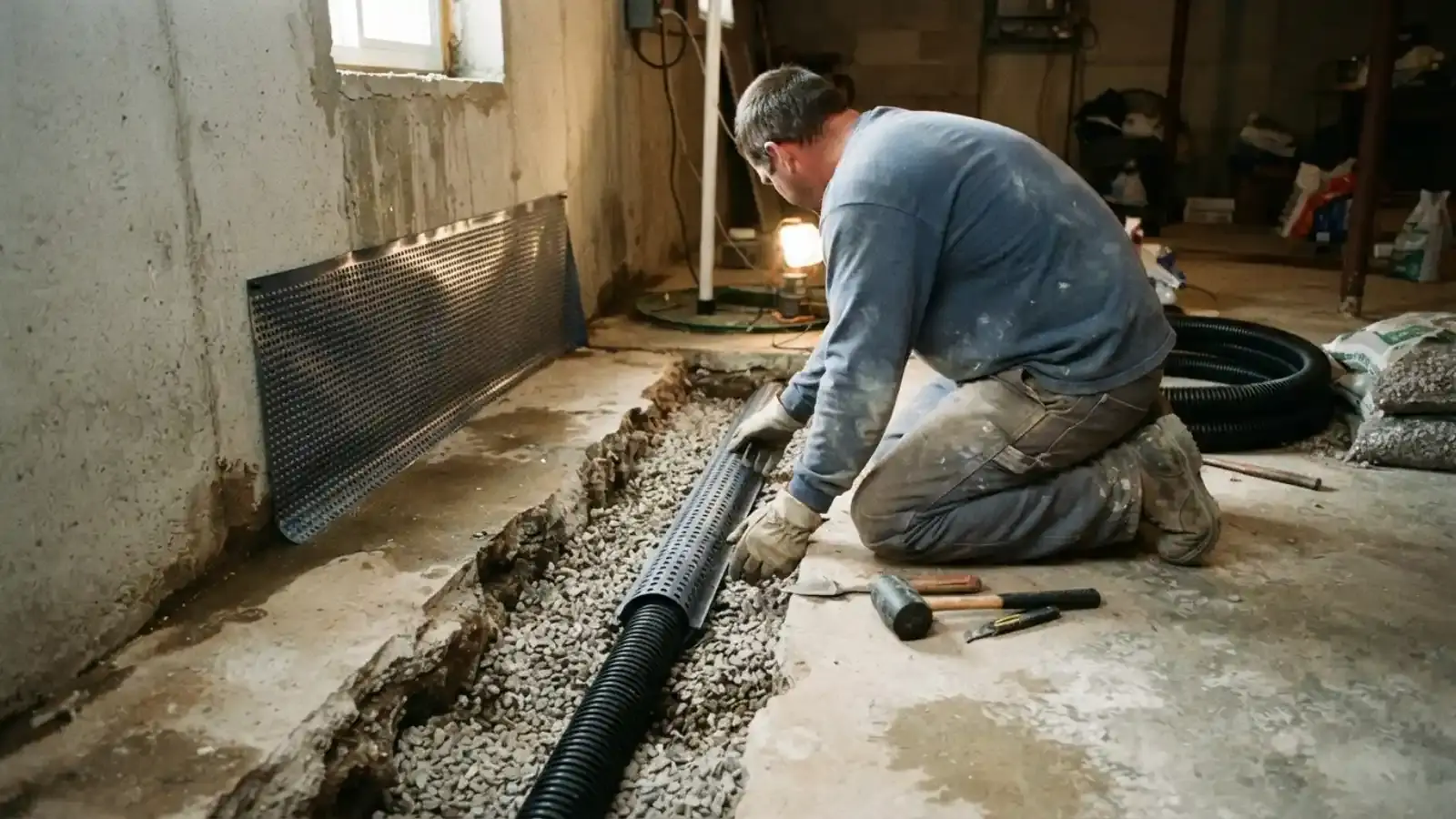
An interior perimeter drain collects water at the footing and sends it to a sump pit, where a pump discharges it outdoors. Exterior fixes such as regrading, extended downspouts and gutter repair stop water before it reaches the wall. Wall and floor sealers help with damp walls, but they do not stop active water under pressure.
The best fix often combines several. Start with the cheapest, such as gutters and grading, and move to interior drainage if water keeps coming. A blog post on liquid rubber coatings covers where such products help and where they do not.
| Approach | Best for | Limits |
|---|---|---|
| Gutter and grade fixes | Water entering from the surface | Does not stop groundwater |
| Interior drain and sump | Water from below or at the footing | Needs a working pump |
| Wall and floor sealers | Damp walls, minor seepage | Not for active water under pressure |
| Dehumidifier | Condensation and humidity | Does not stop leaks |
Soils and homes around Indian Trail
Union County sits in the Piedmont, where clay soils slow drainage. Many Indian Trail homes are on slabs or crawlspaces, so a full basement is not universal, but crawlspaces take on water too. Standing water in a crawlspace raises humidity, feeds mold and can harm insulation and floor framing.
Newer subdivisions often have graded lots that carry water between houses. Changes to grading, a new patio or a fence can alter those flow paths and send water to a foundation. That is why we look at the whole lot and not just the inside wall.
Our approach
Look and listen
We check where and when water enters and look for plumbing leaks first.
Fix the outside first
Gutters, downspouts and grading are the first and cheapest layer.
Add drainage if needed
Interior drain and a sump with a quality pump take water away.
Test and monitor
We test the system and explain what to watch during heavy rain.
Cost factors for waterproofing
Insurance typically does not cover water entry from groundwater or poor drainage. Sudden pipe failures are different, so identify the source before filing.
Cheaper steps to try first
Most wet basements and crawlspaces have a surface cause, and surface fixes are cheap. Clean gutters so they carry water to the downspouts. Extend downspouts several feet from the foundation or tie them to a buried drain that exits downhill. Slope the soil so it falls away from the wall for at least the first few feet.
Check where the water comes from by watching during rain. If water runs along the wall, fix the grading. If it pools at a downspout, extend the pipe. If it only appears when the water table rises, the problem is groundwater and drainage is the answer.
When an interior drain is the answer
Interior perimeter drains collect water at the footing and lead it to a sump pit. They are a standard approach in homes with a basement or a deep crawlspace where exterior work is not practical. The drain sits just below the floor level along the wall. A quality sump pump, a sealed pit and a discharge line that goes outdoors complete the system.
The system works with the water. It does not stop the soil from being wet. It gives the water a path so pressure does not build against the wall and floor. That is the key idea behind most lasting solutions.
Safety steps when a basement floods
Water and electricity do not mix. Follow these steps before any cleanup, and see the State Plumbing Code, which adopts the International Plumbing Code (IPC), for discharge rules that apply to sump work.
- Do not walk into standing water if outlets or the panel are wet
- Turn off power at the breaker only if you can reach it dry
- Do not run a standard shop vacuum on sewage
- Move valuables up and take photos for your insurer
- Call the 24/7 line if water is still rising
Waterproofing questions
Can you help with a flooding basement at night in Indian Trail?
Yes. Call the 24/7 line for active flooding. We prioritize pump failures and pipe leaks and set up a longer-term plan afterward.
Do you waterproof crawlspaces?
We assess crawlspace water, drainage and humidity, and recommend drainage or a sump where it fits.
Will paint-on sealers stop my leak?
They can help with damp walls but not with water under pressure.
How do I tell condensation from a leak?
Tape a square of foil to the wall for a day. Moisture on the outside means condensation. Moisture underneath suggests seepage.
Do you serve Monroe?
Yes. See the Monroe page.
What should I do first?
Check gutters, downspouts and grading. Fix surface water before spending on interior systems.