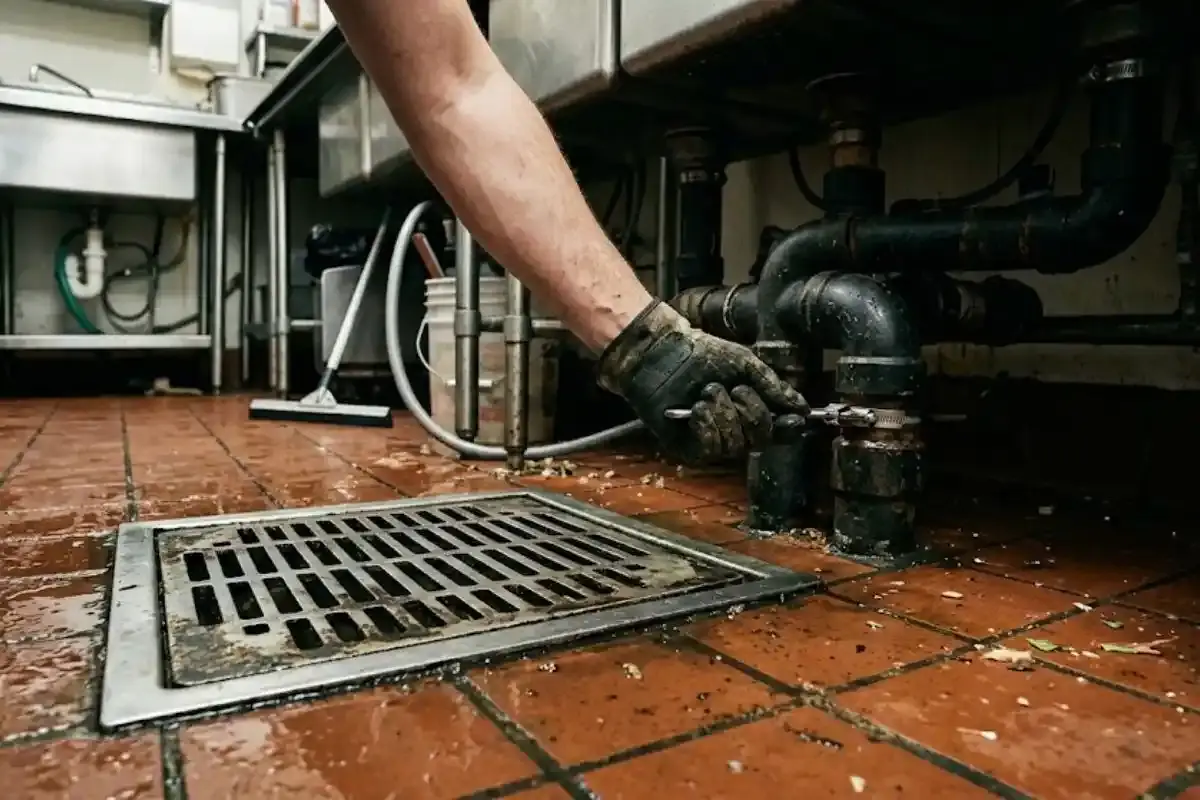
When a restaurant floor drain backs up or a shop loses hot water, you lose customers by the hour. Our line is answered 24/7, and commercial calls get the same urgency as home emergencies. Tell the plumber who answers whether you can keep operating and whether water is still flowing.
If water is spreading, close the shutoff for the affected area or the building main and keep staff and customers away from wet floors. Photograph the damage for your insurer before cleanup.
Commercial plumbing emergencies we handle most
Floor drain backups
Grease, debris and shared lines clog drains and push wastewater into kitchens and back rooms.
Water heater failure
Commercial tanks and larger units serve kitchens, salons and restrooms and need fast attention.
Restroom leaks and clogs
Heavy use stresses toilets, urinals and supply lines.
Grease line clogs
Kitchens build grease in drains faster than homes do and need scheduled jetting.
Leaks in shared walls
A leak in a tenant space can affect neighbors and the landlord.
Backflow concerns
Devices that protect the public supply need testing in many buildings.
How we handle business calls
We ask about the type of space, the fixtures affected and whether you own or lease, since the landlord may be responsible for some systems. A quick phone call decides whether to send a drain crew, a repair plumber or both. For grease and recurring blockages, we recommend hydro jetting on a schedule instead of repeated emergency calls.
We coordinate around your business hours. Many commercial jobs are done early in the morning or after closing to keep you open.
Retail corridors and commercial areas in Indian Trail
Indian Trail's commercial activity runs along US Highway 74 and Independence Boulevard and in neighborhood centers on roads like Old Monroe Road, including the Shops at Sun Valley and Union Town Center. Strip centers share walls, roofs and sometimes drain lines, so a failure in one tenant space can show up in the next. That is why we check shared lines and cleanouts early.
Newer centers have modern PVC and copper, but the heavy use of restaurant and personal-care tenants means grease, hair and chemical loads that strain drains. Planned maintenance saves money against emergencies.
| Issue | Business impact | Usual response |
|---|---|---|
| Drain backup | Health code risk, closure | Clear fast, camera, plan maintenance |
| No hot water | Dishwashing, sanitation, comfort | Diagnose and repair or replace |
| Restroom out of service | Customer experience, code | Repair the fixture or supply |
| Active leak | Property damage | Shut off, locate, repair |
| Grease buildup | Repeat clogs | Scheduled jetting |
Cost factors for commercial plumbing
Business property and liability policies vary. Report damage to your carrier and your landlord, and keep records of lost operating time.
Planning around business hours
A plumbing failure rarely respects your schedule, but the repair can. When a restaurant closes at 10 p.m., an after-hours crew can clear a drain or swap a heater element before the morning prep. For retail and offices, early morning visits keep customers out of the way. Tell the dispatcher your hours and any constraints, such as health inspections, deliveries or tenants sharing the same lines.
We document what we find and what we do, so you have a record for the landlord, the insurer or a health inspector. That record also helps you spot patterns, such as a drain that backs up every few weeks or a water heater that fails every few years.
Preventive habits that cut emergency calls
Grease interceptors and kitchen drains need regular attention. Floor drains in back rooms need to be flushed and the traps kept wet. Restroom fixtures should be checked on a schedule. Water heaters in busy kitchens benefit from flushing and anode rod checks. Staff training matters too, since a single bad habit, such as pouring grease down a drain, causes the call you pay for later.
- Keep a list of shutoff locations for the building and each tenant space
- Post the 24/7 number where staff can see it
- Schedule jetting for grease-prone lines before they back up
- Test and log backflow devices where required
- Replace worn supply lines and angle stops during slow periods
Safety steps and codes for businesses
Commercial plumbing follows the State Plumbing Code, which adopts the International Plumbing Code (IPC), and food-service drains and grease control are also subject to local health and utility rules. Here are the safety steps we ask staff to take before we arrive.
- Keep customers and staff away from wet floors and electrical equipment
- Shut off the water to the affected area or the building main
- Do not use chemical drain cleaners in a full line
- Photograph damage and note the time
- Tell us if a health inspection or a delivery is waiting
Leaks, backflow and planned testing
Businesses have leak problems that homes do not. Shared walls, flat roofs, long runs in ceilings and several tenants on one meter make a hidden leak harder to trace and harder to assign. We use the same listening, thermal and pressure methods we use in homes, and we write up what we find so you can discuss it with the landlord.
Some leak work for businesses ends without a repair order, because the leak sits on a part of the building the owner controls, and we say so honestly.
Backflow prevention devices protect the public water supply from contamination, and many commercial buildings are required to have them tested on a schedule. It is planned work, not an emergency. Ask your water utility what applies to your property, and keep the test records. If a device fails a test, it needs repair or replacement and a retest before it is accepted.
Commercial plumbing questions
Do you handle commercial plumbing emergencies at night or on weekends in Indian Trail?
Yes. The 24/7 line is answered every day, and we prioritize drains, leaks and no hot water for businesses.
Do you serve restaurants?
Yes. Grease line clearing, floor drains and water heater service are common calls.
Who is responsible for plumbing in a leased space?
It depends on your lease. We can tell you what failed, and you check with the landlord on responsibility.
Can you schedule preventive maintenance?
Yes. A jetting schedule or a periodic inspection can prevent emergency calls.
Do you serve Monroe businesses?
Yes. See the Monroe page.
Do you do after-hours repairs so I can open on time?
We can often schedule work for early morning or after closing.