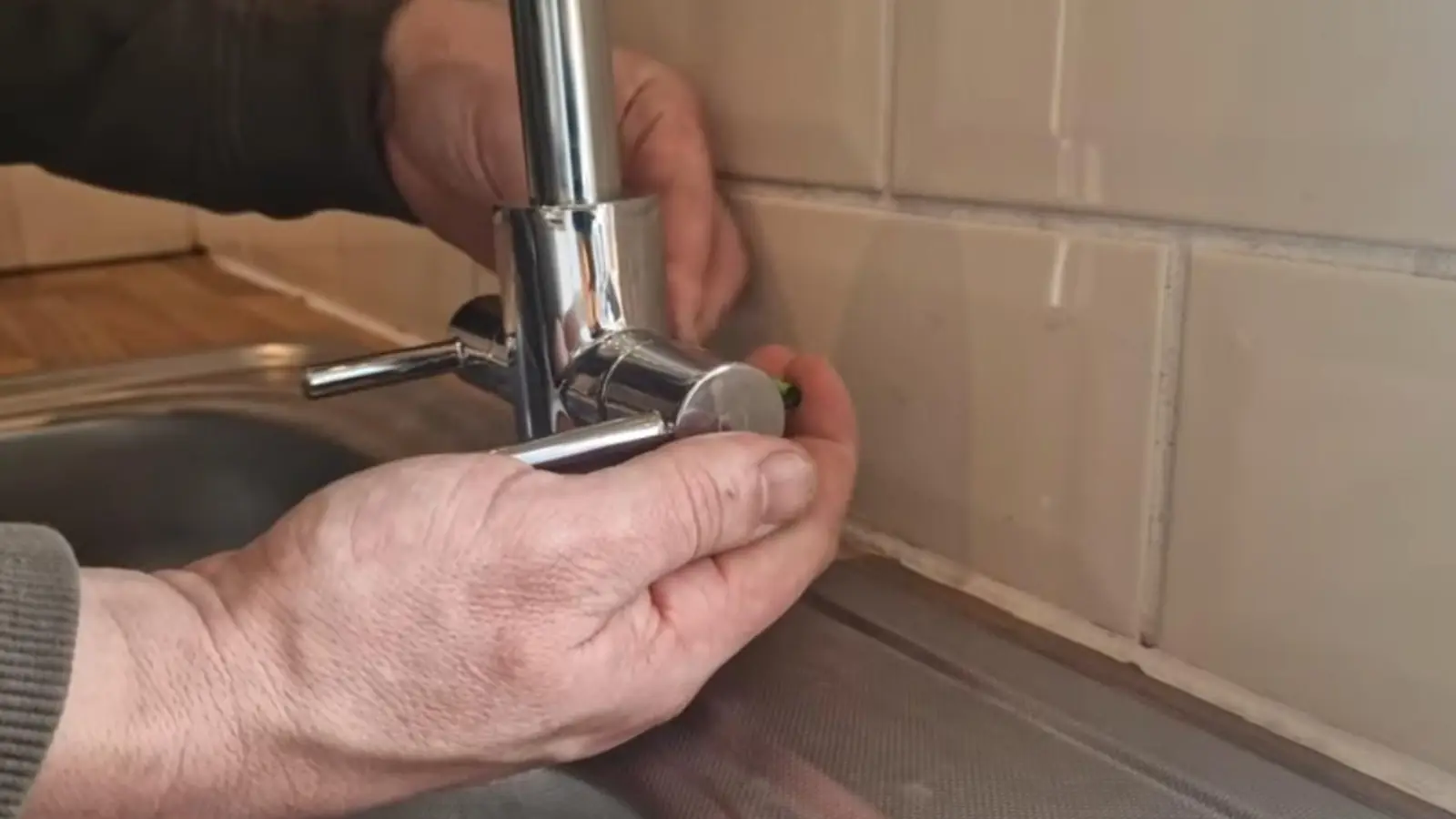
A faucet that drips is wasting water and a faucet that sprays under the sink is damaging a cabinet. Most repairs are quick, and we work on kitchen, bath, laundry and outdoor faucets. Our line is open 24/7, which matters when water is spraying and the shutoff will not turn.
If water is spraying under the sink, close the small valves on the supply lines under the cabinet, turning them clockwise. If they will not move or do not stop the flow, shut off the main at the house or the meter and call us.
Spraying faucet emergency: why faucets leak
Most leaks start in a few places. The cartridge or valve inside the handle wears out and lets water past. Rubber seals and O-rings harden. Mineral deposits can scratch a seat, though local water is soft, so scale is a lesser factor here. The supply lines under the sink, which are flexible braided hoses, can fail at their fittings.
Knowing which one is leaking decides the fix. A drip from the spout points to the cartridge or seat. Water around the base of the handle points to O-rings. Water in the cabinet points to supply lines or the faucet body.
Drip from the spout
Worn cartridge, ceramic disc or seat. A rebuild or cartridge swap stops it.
Leak at the handle
O-ring or packing wear. Replaced during a short disassembly.
Low flow
A clogged aerator, a partly closed valve or a failing cartridge.
Water under the sink
Supply lines, a faucet connection or the drain assembly. We trace the wet spot.
Hot and cold mix
A worn mixing cartridge in a single-handle faucet.
Stiff or loose handle
A worn set screw or cartridge.
Brands and parts
Many faucets use brand-specific cartridges. Grohe, Moen, Delta, Kohler and others each have their own parts. We bring common cartridges and order specialty ones. For a how-to for homeowners on a common premium brand, see the answers in our service FAQs below. If the faucet is old or its parts are discontinued, replacement is often the simpler answer.
When you choose a new faucet, pick one with a solid brass body and a ceramic cartridge, and ask about warranty and parts availability. A cheap faucet that fails in two years costs more than a decent one that lasts.
Local water and your fixtures
Union County Water reported average hardness of 23 ppm in its 2023 report, which is very soft. Soft water seldom leaves the crusty scale that clogs aerators in hard-water towns. That helps faucets last longer, though rubber seals and cartridges still wear with use. The report lists chloramine as the disinfectant, and some rubber parts age faster with chloramine than others, which is one reason we use quality replacement parts.
| Situation | Usually repair | Usually replace |
|---|---|---|
| Drip, faucet under 10 years | New cartridge or seals | Rarely |
| Leak at the base | New O-rings | Corroded body |
| Discontinued parts | Substitute if possible | Replace |
| Worn finish and loose parts | Not worth repairing | Replace |
| Water in the cabinet | Replace supply lines first | Replace if the body leaks |
Cost factors for faucet repair
Slow drips are usually not covered by insurance as a repair. A sudden failure that floods a cabinet and floor may be, so photograph and report quickly.
Replacing supply lines and shutoff valves
The flexible lines under a sink and the small valves that control them wear out. Braided lines can burst without warning, and shutoff valves that have not been turned in years often stick or leak when you try them. Replacing both when you repair a faucet is a small cost that prevents a big flood.
Turn each valve a quarter turn to test it before any repair. If it will not move or it drips after you move it, replace it. We carry common sizes and can swap them during the visit.
Choosing a faucet that lasts
Look for a solid brass body, a ceramic cartridge and a finish with a long warranty. Check that replacement parts are available for the model, since a faucet with parts you cannot buy becomes trash when one piece fails. Pull-down kitchen faucets add hose and weight components that wear, so choose one with a metal sprayer head and a good guide.
Broken or stuck supply valves
Under most sinks and behind most toilets sits a small shutoff valve called an angle stop or supply stop. These valves are ignored for years and then fail when you need them. A valve that will not turn, drips at the stem or breaks off during a repair turns a simple job into a flood. If the valve will not shut off the water, close the main and call.
We replace failed stops with quarter-turn valves, which are less likely to seize than older multi-turn ones, and we replace the braided supply lines at the same time. Test your stops once or twice a year by turning each a quarter turn and back. A valve that moves freely is ready when you need it.
Shower valves, tub faucets and showerheads
A shower that drips from the head after you shut it off, a tub spout that leaks or a handle that has gone stiff points to a worn cartridge or a failing valve. Showerhead leaks are often a worn washer or a loose connection. Valve repair usually needs access from behind the wall or through the trim, and the cartridge has to match the brand.
A shower valve that will not shut off is more urgent. Close the main if water keeps running, and call. We replace cartridges, rebuild valves and install new ones when the body is damaged. If the wall has to be opened, we plan the opening to match your tile.
Faucet repair questions
Do you handle faucet repair emergencies at night or on weekends in Indian Trail?
Yes. Close the supply valves or main and call the 24/7 line. We will arrange a plumber to repair it.
Can you repair a Grohe faucet?
Yes. We service Grohe and the other major brands and order the proper cartridge when needed.
Is a drip worth fixing?
Yes. A steady drip wastes thousands of gallons a year and can stain the sink.
Should I replace the supply lines?
If they are old, braided and kinked or corroded, yes. They are inexpensive insurance against a flood.
Do you serve Monroe?
Yes. See the Monroe page.
Do you install new faucets?
Yes. See our plumbing installation page.