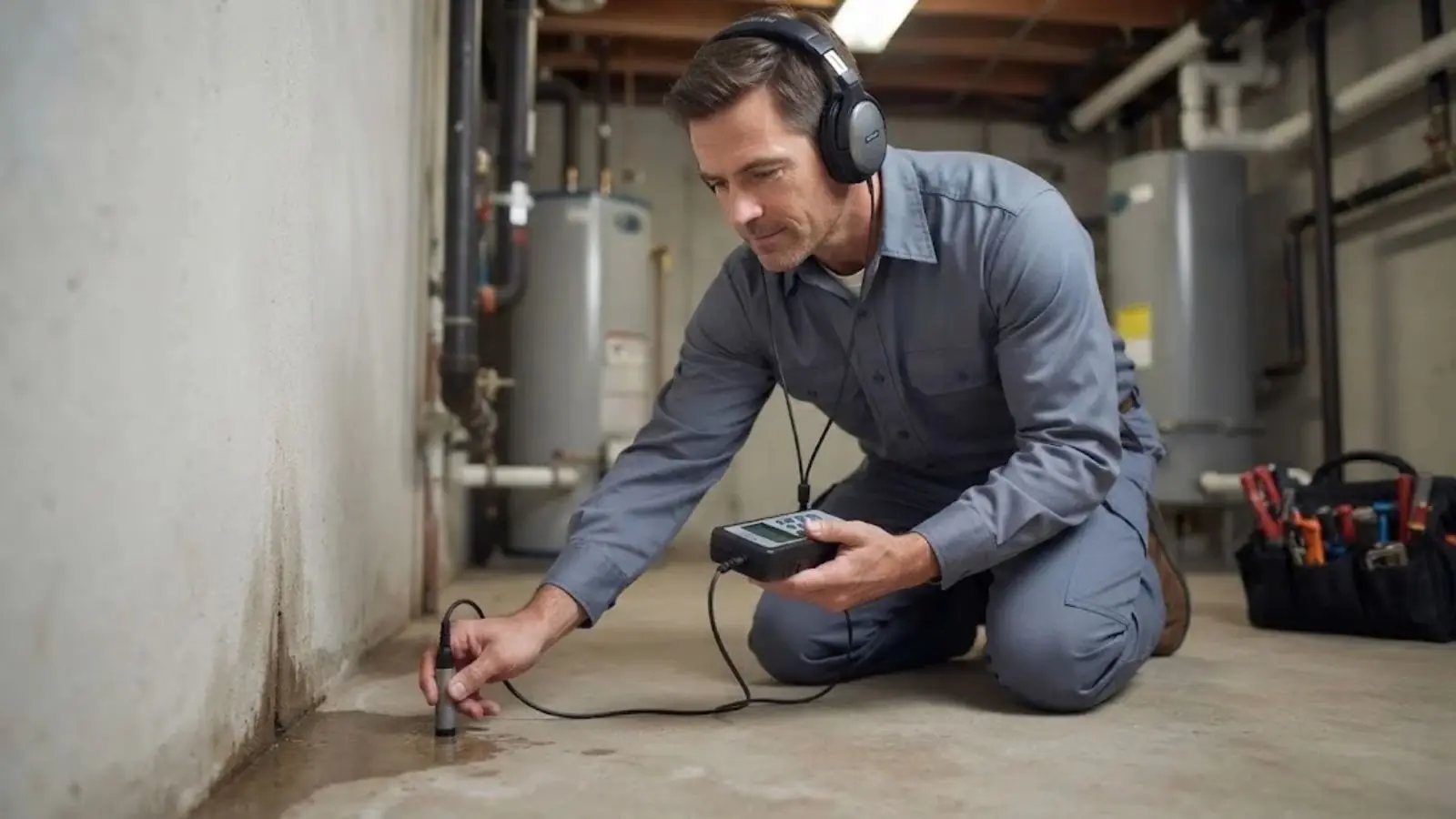
Water that leaks where you cannot see it can cost you hundreds of dollars before you notice. A hissing sound at night, a warm patch on a floor or a meter that keeps moving are all signs worth a call. Our line is open 24/7, and if water is actively flowing, the plumber will tell you how to shut it off first. In attached homes such as the townhomes in Bonterra Village, a leak can reach a neighbor, so finding the source quickly matters.
Locate the main shutoff, usually near the water meter at the street or where the line enters the house, and turn it off if you see water pouring or ceilings sagging. Then call. A burst line is handled on our burst pipe repair page, and this page is about leaks you have to hunt for.
When a leak is an emergency, plus a quick test before we arrive
Turn off every fixture and appliance that uses water. Open the meter box and look at the leak indicator, usually a small triangle or dial. If it moves while nothing is running, water is escaping somewhere between the meter and your fixtures. Write down the meter reading, wait an hour with no water use, and check again.
If the number changed, you have a leak. If it did not, the leak may be intermittent, such as a toilet flapper that seals badly now and then. Either way, tell us what you saw.
How we find a leak without demolition
Acoustic listening
Sensitive microphones hear the sound of pressurized water escaping through a pipe wall or slab.
Thermal imaging
A camera shows temperature differences from hot water leaks under floors and behind walls.
Pressure testing
We isolate sections of the system and watch for pressure loss to narrow the zone.
Tracer gas
A safe gas mix pushed into the line escapes at the leak and is detected on the surface.
Moisture mapping
A meter reads dampness in drywall, subfloor and slab to bound the wet area.
We combine methods because no single tool is right every time. Once the spot is marked, you see the size of the opening and the repair is planned. That often means a small hole instead of a large one.
Where leaks hide in Indian Trail homes
Many homes in Indian Trail are slab on grade or crawlspace builds from the growth since 1990. Slab leaks occur in supply lines buried in or under concrete, and they show up as warm floor spots, running sounds or a sudden jump in the bill. In crawlspaces, a leak can sit for months over damp soil with no visible drip inside the house.
Union County Water reported a pH of 7.11 in its 2023 report, which is close to neutral. That is a gentle range for most pipe materials, so leaks here tend to come from workmanship, pressure and age of fittings more than from aggressive water. Pressure that is too high stresses joints, which is why a regulator check is part of many visits.
| Location | Typical clue | Likely cause |
|---|---|---|
| Under a slab | Warm floor, sound of running water | Pinhole in a buried line or a fitting |
| In a wall | Stain, bubbling paint, musty smell | Failed joint or fastener puncture |
| In a crawlspace | Damp insulation or soil, odor | Supply fitting or drain connection |
| Yard service line | Soggy ground, low pressure, high bill | Failed coupling or damaged pipe |
| Under a sink or toilet | Slow drip, soft cabinet floor | Supply line, seal or valve |
Cost factors for leak detection
Many homeowners policies cover the sudden damage from a leak and sometimes the cost to access the pipe, but not the pipe repair. Ask your carrier before work, and keep the detection report.
What to do while you wait for a plumber
Shut off the main if you find water you cannot stop. Move belongings from the wet area and take photos. Open windows and run fans to dry the air if it is safe to do so. Avoid walking on warm or damp spots in the slab if electrical devices are nearby.
Write down your meter reading, the time and anything unusual you hear. That information shortens the diagnosis and helps us track the leak by the rate at which the meter moves.
After the leak is found
Once the leak is located, you can decide on the repair. A small patch is often enough. A pipe that has failed in several spots may justify a reroute through the attic or a repipe of a section. We explain each option, show you what the cost drivers are and let you choose.
Sources behind the meter test
The meter test described here is the same check many utilities recommend for finding hidden leaks, and Union County Water publishes its own customer information on meters and bills. Repairs that follow detection are made to the State Plumbing Code, which adopts the International Plumbing Code (IPC), and a change in the design of plumbing needs a Union County permit.
Meter still running or a high water bill
Many leak calls begin with a number, not a puddle. A bill that jumped, a meter that keeps turning with everything off or pressure that sags are the first clues. Start with the meter test above, then check the cheap suspects. A toilet flapper that seals badly can waste a surprising amount of water and never makes a sound. A dripping hose bib, a leaking softener drain or a stuck irrigation valve do the same.
If every fixture checks out and the meter still moves, the leak is in a buried line, under the slab or inside a wall. Keep the reading you wrote down and call. We use it to estimate how big the leak is and where to start looking. A small constant movement usually means a slow pinhole. A fast spin means a larger break that should be shut off at the main until it is repaired.
Ceiling and wall leaks
A brown stain on a ceiling, bubbling paint or a damp patch on drywall means water is traveling from somewhere above or behind. Do not assume the leak is directly over the stain, because water follows framing before it shows. Look at what sits above, such as a bathroom, a water heater closet, an upstairs supply line or a roof penetration.
If a ceiling is bulging, place a bucket under it and poke a small hole at the lowest point of the bulge to let the water out in a controlled way, then call. A full ceiling can drop without warning. We find the source with moisture mapping and thermal imaging, mark the spot and open as little drywall as the repair allows.
Under-house and crawlspace leaks
Many Indian Trail homes sit over crawlspaces, and a leak there can run for months because nobody looks. Warning signs include a musty smell inside, soft spots in the floor, a rising bill and damp insulation hanging from the floor framing. Pests are drawn to the moisture too.
We check supply lines, drain connections and the water heater feed from below, usually with a flashlight, a moisture meter and pressure testing. If the floor insulation is soaked, it needs to dry or be replaced after the repair, or the moisture lingers. Wear boots and a mask if you go in yourself, and stay out if you see standing water near wiring.
Buried and yard leaks, irrigation and pools
A leak in the buried line between the meter and the house shows up as a soggy strip of lawn, unexplained low pressure or the sound of water at the meter. Our water service line repair page explains the repair once the break is found. Irrigation systems add another path, because a broken sprinkler head or a stuck zone valve leaks quietly. Turn the irrigation controller off and recheck the meter to rule it in or out.
Pool and spa leaks are a separate question. Water loss from a pool is often evaporation. A simple bucket test, comparing the pool level with a marked bucket of water beside it, shows whether loss exceeds evaporation. If it does, the plumbing lines are suspects. A yard meter box that stays wet or full of water can also point to a leaking fitting at the meter.
Slab leaks
A slab leak is a leak in a pipe in or under the concrete floor. Warm spots on the floor, the sound of running water when everything is off and a sudden jump in the bill are the classic signs. Hot water lines leak more often because heat stresses the pipe.
We pinpoint the leak with acoustic equipment and thermal imaging, then talk through the options, which are a spot repair through a small opening in the floor, rerouting the line through the walls or ceiling or repiping that section.
We do not give a one-size answer. A single pinhole in a newer home is a different job from repeated leaks in an older line. Insurance often covers the sudden water damage but not the pipe, so call your carrier before demolition and keep the detection report.
Leak detection questions
Do you handle leak detection emergencies at night or on weekends in Indian Trail?
Yes. Active leaks are urgent. Call the 24/7 line, shut the main off if water is flowing, and we will plan the visit.
How do I tell if my water bill spike is a leak?
Do the meter test. If the dial moves with every fixture off, there is a leak. Check toilets first, since a running flapper can waste a lot of water.
Will you have to cut into my floor?
Usually only a small access opening where the leak is marked. We try to keep it small.
Is a slab leak an emergency?
It can be. Water under a slab can undermine soil and flooring. Shut off the main if the bill or sound suggests a significant leak, and call.
Do you serve Monroe?
Yes. See our Monroe page.
Is a running toilet a leak?
It is. Our toilet repair page explains the usual causes.