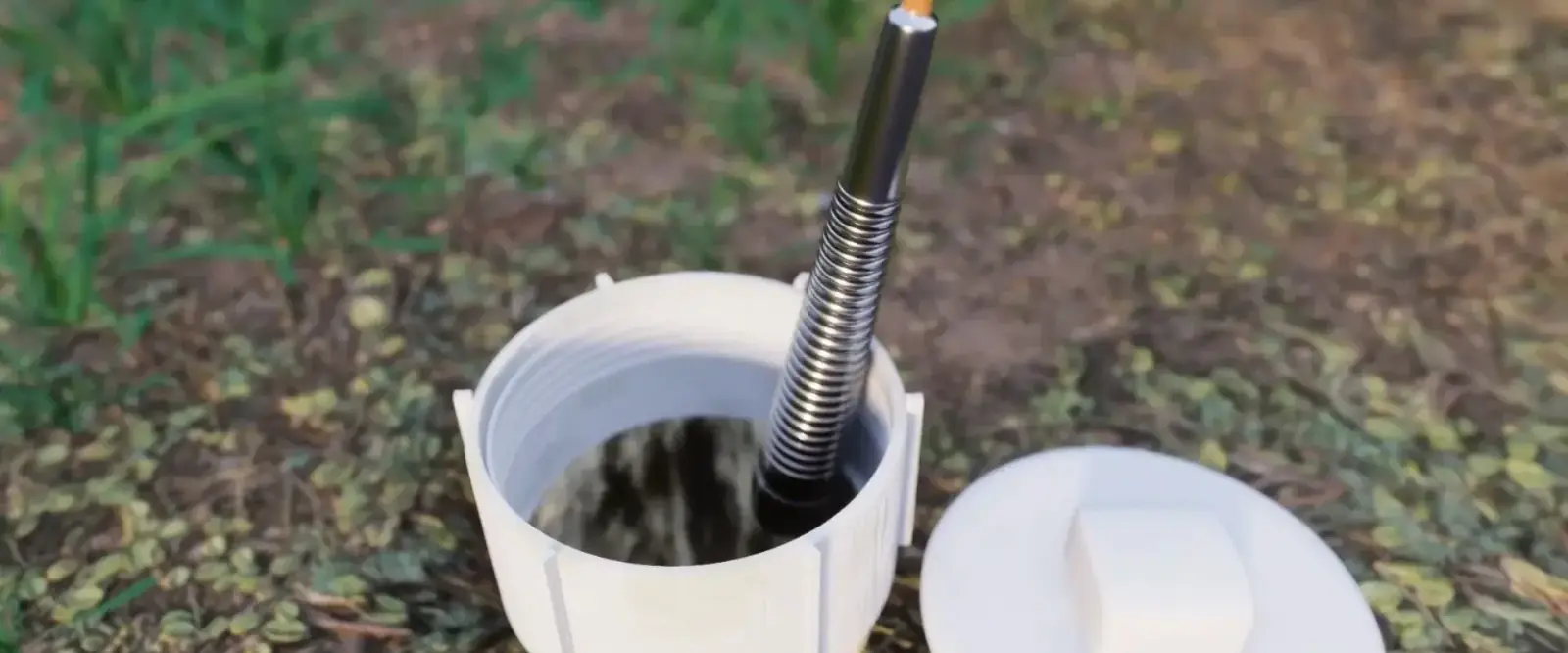
A camera inspection answers questions that guessing cannot. Is the clog a one-time event or a symptom of a damaged pipe? Is the lateral on a house you are about to buy sound? A small waterproof camera on a flexible cable travels through the line and records what it sees.
This is a planned service in most cases, but our line is answered 24/7 if you have a backup now. If sewage is coming up, we clear the line first and inspect after.
What the camera finds
The camera shows pipe material, joints, roots, grease, scale, offsets, bellies and breaks. A locator on the camera head lets us mark the exact spot and depth on the surface, so any repair starts at the right place and digs only as much as needed.
You get a clear description of what is in the pipe and, where possible, video you can keep. For a repair decision, for a negotiation on a home sale or for an insurance conversation, that record matters.
Roots
Fine hair roots in joints or thick masses that fill the pipe.
Bellies
Low spots where water pools and solids collect.
Offsets
Joints that have shifted so the pipe walls no longer align.
Cracks and breaks
Visible damage that lets water or soil in or out.
Grease and scale
Buildup that narrows the pipe and invites clogs.
When an inspection is worth the money
Recurring clogs are the strongest reason. So is buying a home with a lateral you cannot see, especially a house built long before or after the typical subdivision era. A camera also helps when you plan landscaping, a new tree or an addition near the sewer path.
For older Monroe homes near the downtown and residential historic districts, pipe material may be clay, cast iron or an early plastic. A camera shows its condition before you decide on a repair. Our sewer line repair page covers what happens if a fault turns up.
The inspection itself
Open an access point
We use a cleanout when there is one, or another opening when there is not.
Run the camera
The head moves through the line while we watch and record the video.
Locate and mark
We mark depth and position of any fault so repairs are precise.
Explain and advise
We walk you through the findings and say what, if anything, should be done.
Buying or selling a home in Indian Trail
Home inspectors do not routinely camera the sewer lateral. A camera inspection before closing can show a hidden belly or root problem, and it gives you leverage to negotiate repairs or a credit. For sellers, an inspection ahead of listing removes a surprise.
The Indian Trail area includes a mix of 1990s homes, 2000s subdivisions and newer builds, and the age of a lateral says less than the quality of its backfill and the trees nearby. That is why we look instead of assuming.
Cost factors
An inspection is a diagnostic cost and is not normally covered by insurance. If the findings lead to a claim, your insurer may want the video.
Reading the findings
A good report names the pipe material, shows the footage where each defect appears and says how severe it is. A single root intrusion at a joint is different from a long belly. A hairline crack is different from a collapsed section. The goal is a clear decision about what to do next, not a long list of worries.
We describe each finding in plain language and say whether it needs action now, monitoring or nothing at all. If you are buying a home, a report that shows a sound line is useful too, because it confirms the biggest hidden cost is not waiting for you.
What to do after the camera
If the line is clean and sound, the next step might be a cleaning on a schedule or simply nothing. If roots are present, cutting and jetting clears them, and a repair or lining may stop them from returning. If there is a belly or a break, you can plan a repair on your timeline instead of reacting to a backup.
Standards for camera work
Camera inspection records pipe condition. The pipe itself is built to the State Plumbing Code, which adopts the International Plumbing Code (IPC). Pipe condition ratings are not set by code, so we describe defects in plain terms and show the footage so you can judge for yourself.
Camera inspection questions
Do you do camera inspections at night in Indian Trail?
Emergency clearing is available 24/7. A camera inspection can follow once the line is flowing, usually during the day, but call if you want to ask.
Will the camera damage my pipe?
No. The head is small and flexible. We do not push it where it could snag a broken section.
Do I get a copy of the video?
Yes, we describe the findings and can share the video.
How long does an inspection take?
Most take a short visit. A badly clogged line adds time for cleaning.
Can you inspect before I buy a house?
Yes. Ask the seller for access to the cleanout, and call us to schedule.
Do you serve Monroe homes too?
Yes. See the Monroe page.