A sewer backup is the emergency most homeowners fear. When the main line blocks, wastewater has nowhere to go and finds the lowest opening in the house. Our line is answered 24/7, and sewer line cleaning is among the first calls we prioritize.
While you wait, stop all water use, including toilets, dishwashers and washers. Keep everyone out of the affected room. Turn off power to a flooded basement only if you can reach the panel without standing in water. If you cannot, wait for professionals.
Sewer backup emergency: what a main line blockage looks like
The first sign is often a toilet that will not flush while the tub gurgles. Then the lowest drain, usually a basement floor drain or a first-floor shower, starts to fill. A sewer smell and wet floor follow. Sometimes the blockage is in the lateral on your property, and sometimes it is in the public main, which only the utility can clear.
A quick test helps. If neighbors on your street report the same problem, call the sewer utility too. If only your house is affected, the blockage is almost always in your lateral, and we can clear it.
How we clear a main line
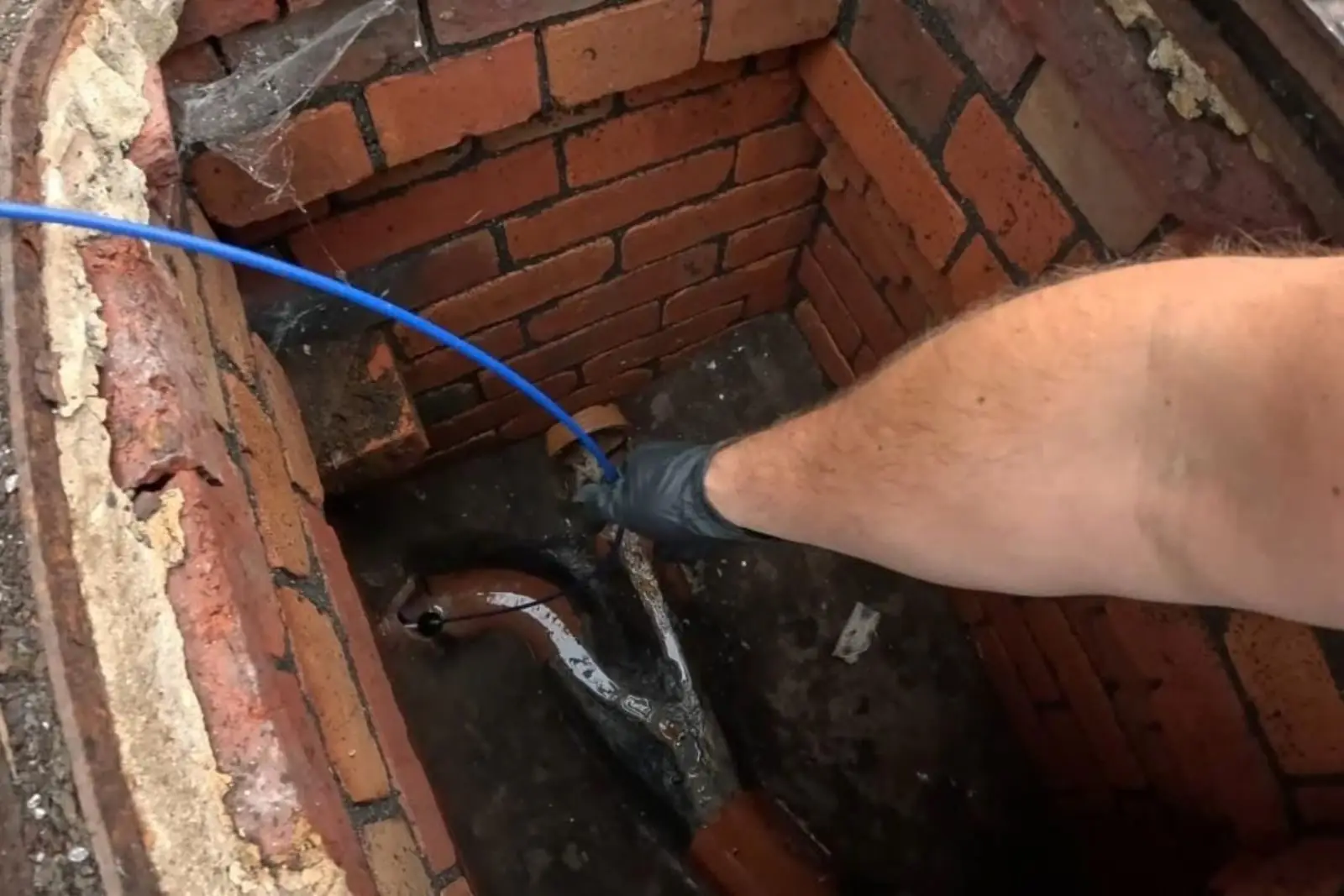
We locate the cleanout, usually a capped pipe in the yard or near the foundation, and open it with care since pressure may be present. A cable machine with a cutting head clears the blockage. When roots or grease are the cause, we follow with jetting or recommend it. Before we leave, we check the flow at the cleanout and inside the house.
If there is no cleanout, we pull a toilet or use another access. We also recommend installing a cleanout in that case, since it saves time and money on every future visit. After clearing, a camera inspection shows what caused it.
Stop the water
Everyone in the house stops using fixtures until the line is clear.
Open the cleanout
We find the access point and release pressure safely.
Cut and flush
A cable machine clears the blockage and we flush the line.
Confirm and advise
We check flow, explain the cause and recommend any follow-up.
Common causes in Indian Trail
Wipes and paper products top the list. Grease from kitchen sinks that cools and hardens in the main line is next. Roots from mature trees planted along lot lines in the subdivisions built since the 1990s are a growing cause, since the trees are now big enough to find gaps in joints. A settled section of pipe collects solids and gradually builds a blockage.
After a heavy rain, groundwater entering a cracked pipe can add load to a line already narrowed by buildup. If your line backs up during storms, tell us, because it points to infiltration rather than a simple clog.
| Location of blockage | Usually responsible | What to do |
|---|---|---|
| Inside the house | Homeowner | Call us, we clear fixtures and branch lines |
| Lateral on your property | Homeowner | Call us, we clear it from the cleanout |
| Public main in the street | Sewer utility | Call the utility. If neighbors are affected, report it |
Cost factors for sewer line cleaning
Cleanup of sewage inside the home is usually not covered by a standard policy without a water backup endorsement. Photograph everything and call your carrier early.
What to expect during a main line clearing
A technician locates the cleanout, sets up a cable machine and feeds the cable into the line while watching the machine and the flow. A good tech asks you to run water at a fixture so the flow tells them when the line is clear. After the cable work, we flush with water and check that every fixture drains freely.
If the blockage was grease, roots or a belly, we show you what came out and explain what it means. A photo of a root ball on the cable tells the story better than words, and it helps you decide on the next step.
Keeping the line clear afterward
Several small habits make a lateral last. Do not pour cooking grease down the sink. Do not flush wipes, paper towels or feminine products. Put a screen in the shower drain. Keep tree roots in mind when you plant near the lateral. If you have a cleanout, keep the cap accessible and the area clear.
Sewer backup: what to do and what not to do
A backup brings health risks. Wastewater can carry bacteria, so avoid contact, wear gloves and boots if you must enter, and keep children and pets out. Do not run the washer or dishwasher, flush toilets or use sinks. Do not pour chemical drain cleaner into a full line, because it will not reach the blockage and it is hazardous when a plumber opens the pipe.
Open windows if the smell is strong and keep the area ventilated. Photograph the damage, then call. After the line is clear, cleanup of porous materials such as carpet and drywall that touched sewage should be done by trained cleaners, since these materials usually cannot be saved.
Sewer line cleaning questions
Do you handle sewer line cleaning emergencies at night or on weekends in Indian Trail?
Yes. The line is answered 24 hours a day, including holidays. Tell us what you see and we will send a plumber as soon as one is available.
Is the backup my responsibility or the city's?
If the blockage is in the public main, the utility handles it. If it is in your lateral or inside the house, it is yours to clear. We can find out which it is.
How do I find my cleanout?
Look for a capped pipe, often 3 or 4 inches across, near the foundation or in the yard along the path to the street. If you cannot find it, we can help.
How can I prevent another backup?
Keep wipes, grease and paper towels out of the drains, and watch tree growth near the lateral. A camera look shows early damage.
Do you serve Monroe?
Yes. See the Monroe page for details.
Do you also do hydro jetting after clearing?
When the camera shows grease or roots, we recommend hydro jetting so the line stays clear longer.