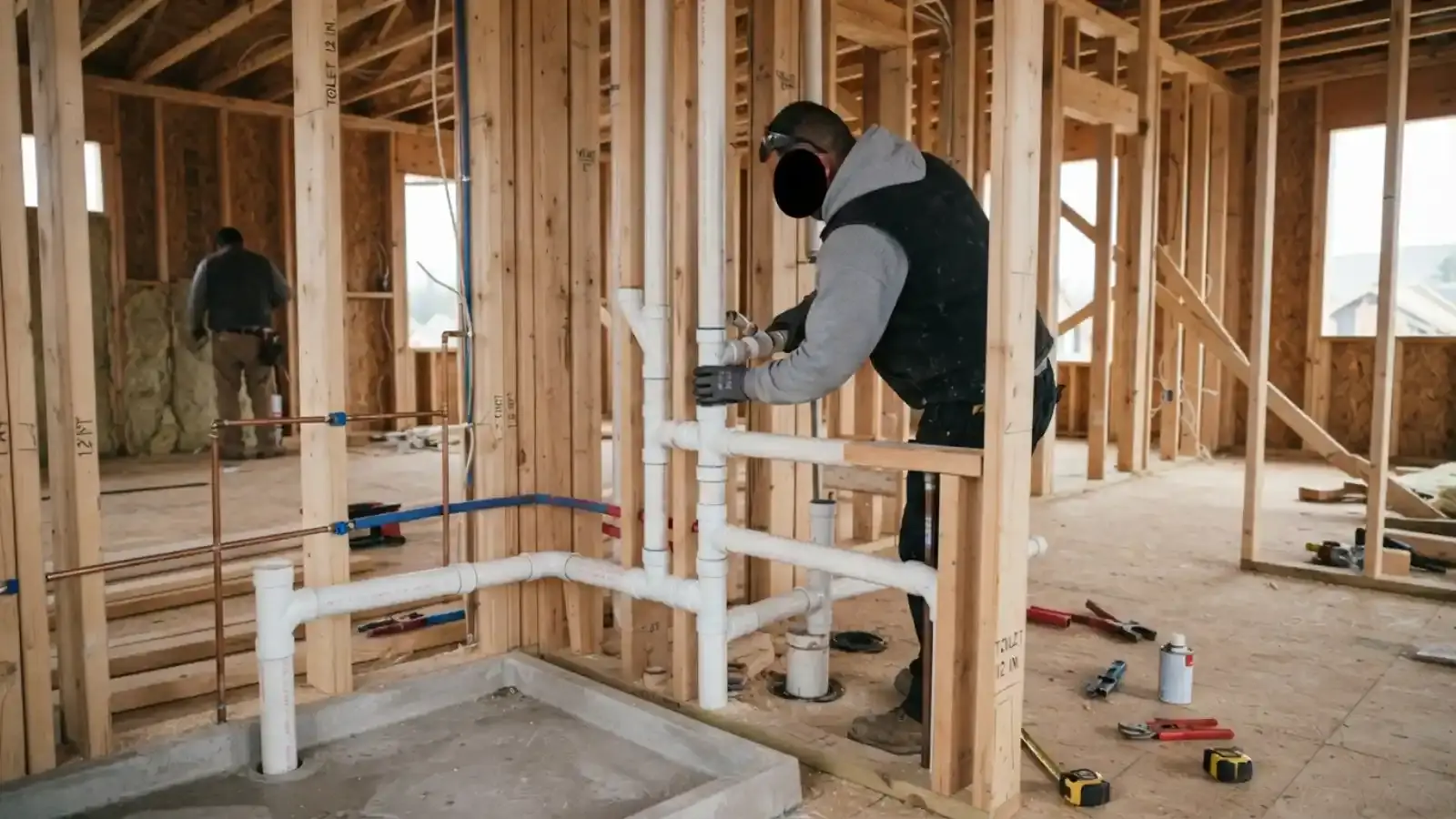
New plumbing work is mostly planning. A bathroom added over a garage, a kitchen remodel that moves the sink or a basement bath all need supply lines, drains, vents and a path to the main. This page covers installation work. If something has failed and water is moving, our line is open 24/7 and you should call first.
A good plumber looks at the whole path before pricing anything. Where will the drain connect, how will it vent, and can the existing water supply handle another fixture?
What we install
Fixtures
Toilets, sinks, faucets, showers, tubs, dishwasher and washer connections, and hose bibs.
Bathroom additions
New drain, vent and supply lines for a bath or half bath, tied into the existing system.
Kitchen remodels
Sink and appliance relocations, new shutoffs and disposal connections.
Laundry areas
Washer boxes, drains and a safe discharge for new utility spaces.
Outdoor lines
Hose bibs and irrigation connections to the house supply.
Water heaters
Tank and tankless units, covered on their own pages.
Planning around drains and venting
Drains rely on gravity, so slope matters. A new bathroom far from the main stack may need a longer run or a lift station. Every fixture needs a vent so that it drains quietly and traps do not siphon. Venting is the detail that separates a clean install from a gurgling one.
The supply side needs adequate pipe size and pressure. If the house already has weak pressure, adding a fixture can make it worse. We test pressure and recommend fixes before you build.
Permits in Union County
Union County Building Code Enforcement states on its residential page that permits are needed for the addition or change in design of plumbing, heating, air conditioning and electrical wiring. New fixtures, relocated lines and added bathrooms are changes in design. The county also lists exemptions for like-for-like fixture replacement and minor work under a set cost, so confirm the rules for your project.
We tell you at the quote stage whether your project needs a permit and an inspection, and we coordinate them with you.
How an installation job runs
Walk and plan
We look at the space, the existing lines and what you want, then outline the route.
Quote and permit
You get a clear price and we help with the county permit where one applies.
Rough in
Supply, drain and vent lines are placed before walls close and inspected where required.
Set fixtures and test
Fixtures are installed, tested for leaks and function, and explained to you.
Why timing matters in a remodel
Plumbing rough-in has to happen before drywall and tile, and inspection comes before cover-up. Calling us early in a remodel avoids opening finished walls to fix a missed drain. If you have a contractor, we coordinate with them.
Many homes in Indian Trail date from the growth since 1990, and their plumbing is a mix of copper, CPVC and PEX. We identify what you have so new connections match the old pipe correctly.
| Factor | Installation | Emergency repair |
|---|---|---|
| Timing | Scheduled around your project | Same day when possible |
| Permit | Usually required for new lines | Usually repair, with fewer permit needs |
| Planning | Full route and fixture plan | Stop the damage first |
| Price | Quoted before work starts | Quoted before work starts |
Cost factors for plumbing installation
Planned installations are not covered by insurance. If you are repairing after a loss, your claim may include required code upgrades, so ask your adjuster.
Working with your contractor
If you are remodeling, tell your general contractor early that plumbing rough-in is on the schedule. Inspections need to happen before walls close, and delays in plumbing delay the whole job. We confirm the fixture locations, the supply sizes and the drain routes with the contractor and the designer, and we mark the plan so everyone agrees before pipe is cut.
Changes after rough-in are costly. Moving a toilet by a foot can mean cutting a slab. Choosing a different sink after the cabinet is built can mean new supply locations. A short planning meeting avoids both.
Fixtures you supply
If you buy your own fixtures, share the model numbers early. We check the rough-in dimensions, the supply requirements and the drain size. Some fixtures need a larger drain or a dedicated vent. A faucet with a specific hole pattern needs a matching sink. Catching mismatches before installation saves return trips.
Codes that govern new plumbing
New plumbing in North Carolina is built to the State Plumbing Code, which adopts the International Plumbing Code (IPC) with state amendments. Electrical connections for disposals and pumps follow the National Electrical Code (NEC) as adopted by the state. Union County Building Code Enforcement issues permits and schedules inspections for work that changes the design of plumbing.
Water softener and filtration systems
Water treatment is a common request, but it should start with data. Union County Water reported average hardness of 23 ppm in its 2023 report, which is very soft, so most homes on that supply do not need a softener. If a test shows your tap is harder, we size and install a softener with a bypass, an air-gapped drain and a nearby outlet. Filters for taste, sediment or chloramine are a different product and a different install.
If you already own a softener or conditioner that has stopped working, we check the control head, the valve, the brine system and the drain. Repair is sometimes possible and sometimes a replacement is wiser. We will not sell a system you do not need.
Gas leaks and gas line work
If you smell gas, leave the building immediately, do not switch anything on or off and call the gas utility or 911 from outside. Do not call a plumber first. After the utility says it is safe, we can inspect, repair or install gas piping for appliances such as water heaters, ranges and dryers, subject to licensing and a county permit. Gas work is never a do-it-yourself job.
New construction and additions
For a new build or an addition, plumbing happens in stages. Underground rough-in comes before the slab, rough-in in the walls comes before drywall and trim-out with fixtures comes last. Inspections happen at defined points. Bringing us in at the design stage lets us place stacks, vents and supply runs where they cost the least and serve the layout best.
Installation questions
Is the 24/7 line only for emergencies?
It is open for emergencies at any hour. For planned installation work, call and we will schedule a visit.
Do I need a permit to add a bathroom?
Almost certainly, since it changes the design of the plumbing. Union County Building Code Enforcement has the final word.
Can you work with my general contractor?
Yes. We coordinate rough-in timing so inspections happen before walls close.
Can you install fixtures I bought?
Yes, though warranty terms may differ, and we need the install instructions and parts.
Do you serve Monroe?
Yes. See the Monroe page.
How long does a bathroom addition take?
Plumbing rough-in often takes a few days, and the whole bathroom project depends on other trades.