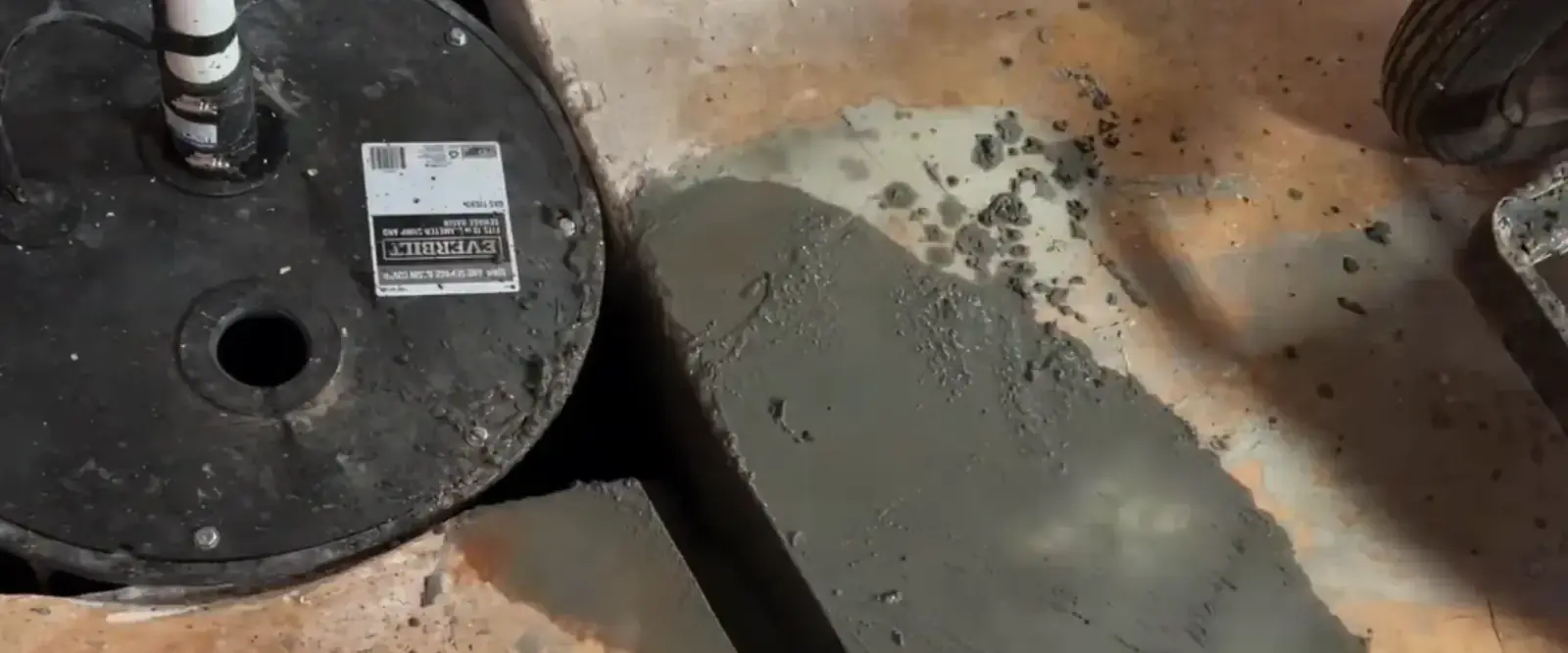
A sump pump cover is a lid that seals the sump pit in the floor. Without one, moist air, odor and soil gas rise from the pit, children and pets can fall in and debris can drop into the pump. A sealed cover with a gasket and openings for the discharge pipe and cord fixes those problems for a modest cost.
If the pit is full and the pump is not running, that is an emergency, so call the 24/7 line and see our sump pump repair page.
What a cover does
Stops humid air
The pit is a source of moisture. A sealed lid keeps it out of the living space.
Reduces odor
Stagnant pit water can smell. A gasket keeps it in the pit.
Blocks debris
Dirt, toys and tools that fall in can jam the float or the impeller.
Safety
A lid prevents falls into an open hole.
Soil gas control
A sealed lid also reduces soil gas entering the space, and testing tells you more about your house.
Choosing a cover
Covers come in plastic and metal, with gasketed, screw-down or clear designs. Choose a size that matches the pit, with cutouts for the discharge pipe, the cord and a vent if your setup needs one. A clear lid lets you see the float and the water level without opening it.
| Option | Strengths | Limits |
|---|---|---|
| Gasketed plastic | Affordable, seals well | Must match the pit size |
| Screw-down metal | Strong, long lasting | Needs tools to open |
| Clear lid | Lets you see the pit | Cost and cleaning |
| Vented | Allows pressure relief | Not fully sealed |
Installing a sealed cover
Measure the pit
Measure the opening and note where the pipe and cord pass through.
Check the pump first
Cycle the pump with a bucket of water and watch the float and check valve.
Fit and seal
Set the cover, seat the gasket and seal around the pipe and cord with the provided grommets or sealant.
Test
Run water into the pit and confirm the pump cycles and the lid stays sealed.
The sealed lid should not block the pump from working. If a vent is required, route it to the outside by the method the pump maker or the local code allows.
Local note: clay soil and storms
Why pits in Union County work hard
Union County sits in the North Carolina Piedmont, where clay soils drain slowly and heavy rain can saturate the ground around foundations. When water has nowhere to go, a pit fills quickly, and a pump that works hard and loses power in a storm is the failure homeowners remember.
A sealed lid and a battery backup are inexpensive protection. Do not discharge sump water into the sanitary sewer, since it overloads the system and is generally not allowed. Ask your utility or Union County Building Code Enforcement about local rules for discharge and for plumbing changes.
Homes near the county seat are covered too, and our Monroe page and the service areas page show how.
Other upgrades to consider
A battery backup keeps the pit pumping during an outage. A high-water alarm warns you before the basement floods. A new check valve prevents water from flowing back. Our basement waterproofing page covers drainage work when water enters often.
Checking the pit before you cover it
A cover seals whatever is in the pit, so look first. Remove debris, check that the float moves freely and look for rust, cracks or a failing check valve. If the pump is more than seven or eight years old or runs constantly, consider replacing it while the pit is open. Fitting a cover over a pump that is about to fail is a waste.
Pour a bucket of water into the pit and watch the cycle. The pump should start, empty the pit and stop without short cycling. A pump that chatters on and off, or one that keeps running after the pit is empty, needs attention.
Venting and noise
Sealed pits need a route for air to move as the water level changes. Many covers include a small vent port or a cutout for a vent pipe. If you have a vent, route it by the manufacturer's directions. Gaskets should seat evenly around the rim, and any screws should be snug but not crushing.
A cover also muffles pump noise and keeps the odor of damp soil away from the living space. If you notice an odor after the cover is installed, check the gasket and the grommets around the pipe and cord. Small gaps are common causes.
Backup power and alarms
A pump that depends on household power fails exactly when a storm knocks it out. A battery backup that kicks in when the main pump stops is a modest addition that protects a finished basement or stored belongings. A high-water alarm gives you a warning before the pit overflows.
Our sump pump repair page explains how a plumber tests the pump and the backup so you know it will work when you need it.
Sources behind this guide
Pit and discharge work follows the State Plumbing Code, which adopts the International Plumbing Code (IPC), and outlets near sump pits follow the National Electrical Code (NEC) requirement for ground-fault protection. Union County Building Code Enforcement can confirm local permit questions.
Sump cover questions
Do I need a cover on my sump pit?
It is a good idea. A cover cuts humidity, odor and the chance of debris or a fall.
Will a sealed cover affect my pump?
Not if it is installed correctly. Leave room for the float to move and for the discharge pipe.
Should I test for radon?
Soil gas can vary by property. Testing is inexpensive and gives you real data for your home.
Can I discharge my sump into the sewer?
Generally no. Send it outside, away from the foundation.
Do homes in Indian Trail need sump pits?
Many are slab or crawlspace homes without one. Those with basements or damp lower levels often do.