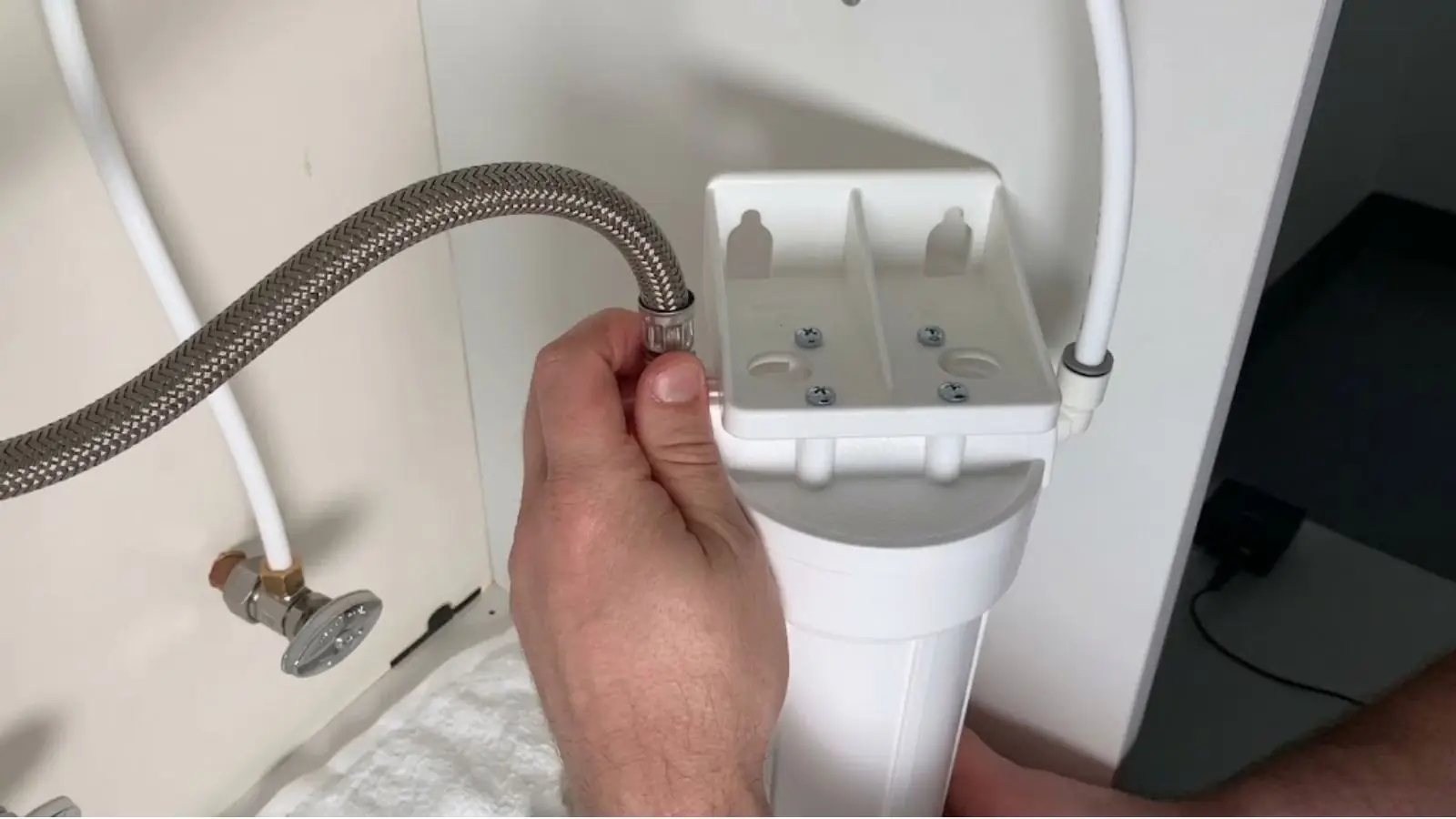
A salt-free water softener is not a true softener. It conditions the water, usually with a media that turns hardness minerals into tiny crystals that stay suspended and do not stick as hard scale. It does not remove calcium and magnesium the way salt-based ion exchange does, so the water is still hard by a test, though scale is reduced.
That makes the local numbers important. Union County Water reported very soft water at 23 ppm average hardness in its 2023 report, so most homes on that supply do not have much scale to condition. This guide explains what the system does and what its installation involves.
How salt-free differs from a salt softener
| Feature | Salt-free conditioner | Salt-based softener |
|---|---|---|
| Removes hardness minerals | No | Yes |
| Reduces scale | Often yes | Yes |
| Uses salt and drain | No | Yes |
| Needs power | Usually no | Yes |
| Maintenance | Media change on schedule | Salt refills and regeneration |
A salt-free unit can protect pipes and heaters from scale without brine discharge. It will not give the slick feel or the soap lather of truly soft water, because the minerals are still there.
What an installation involves
Choose the location
Place it on the main line before the water heater, with room for service.
Add a bypass
Install isolation valves so you can service it without shutting off the house.
Connect and flush
Plumb the unit in, flush it and check for leaks and flow.
Set the schedule
Note the media change date and the service interval.
There is no drain or electric supply for most salt-free units, which makes them simple compared with a softener. A pre-filter protects the media, so many installs combine a sediment filter and a conditioner.
Should you use one here
If your tap is very soft
A conditioner has little to do. Test first.
If you have scale on fixtures
Test hardness. Scale can come from a different cause, such as a failing heater.
If you dislike salt
A conditioner avoids brine, but it will not make hard water soft.
If you want better taste
A carbon filter does more for taste than any softener.
Local note: soft water and chloramine
What the Union County Water report says
Union County Water's 2023 water quality report listed average hardness of 23 ppm, an average pH of 7.11 and chloramine as the final disinfectant. Hardness at 23 ppm is very soft, so a conditioner would be solving a problem that mostly does not exist on this supply.
If your concern is taste or smell, a filter rated for chloramine is the tool, not a softener. If your home is on a different utility, ask for its report. Union County Building Code Enforcement says a permit is needed for the addition or change in design of plumbing, so confirm whether a new line connection counts.
For a home near the county seat, the City of Monroe's FY2023 report did not list hardness, so test your tap. Our Monroe plumber page explains our coverage, and the service areas page lists other nearby towns.
Marketing claims to watch
Some salt-free products claim to soften water, which is not accurate. Look for third-party test data on scale reduction and ask the seller what the product does and does not do. A plumber can read the label and your water test and tell you whether it fits.
What the testing claims mean
Reputable salt-free systems are tested to show how much scale they prevent on heating elements or in test pipes, not how much hardness they remove. Look for results from an independent lab and for a clear statement of what the test measured. A vague claim that a unit softens water without salt is a red flag.
Ask the seller for a test protocol and the conditions under which it was run. Scale prevention depends on water chemistry, temperature and flow, so a result under one set of conditions may not match yours. Honest sellers explain the limits.
When a conditioner may be useful
A salt-free conditioner can be reasonable in a home with hard water where owners want to reduce scale on water heaters and fixtures but do not want a drain connection or salt to haul. In very soft water, such as the 23 ppm average listed by Union County Water, the benefit is small because there is little scale to begin with.
Ask what problem you are trying to solve. If it is scale on a showerhead, a vinegar soak may do more than a new system. If it is taste or odor, a carbon filter is the right tool.
Installation details
Most salt-free units install on the main line with a bypass, and many need no electricity. Keep the unit upright, protect it from freezing and install a sediment pre-filter if the maker advises it. Follow the replacement schedule for the media, since spent media stops working.
Our plumbing installation page covers what a plumber does to tie a unit in. For a home on a different utility, check that utility's report before you decide. A quick test of your tap's hardness is the best first step.
Sources behind this guide
Installation follows the State Plumbing Code, which adopts the International Plumbing Code (IPC). Performance claims for salt-free systems should cite independent test data according to NSF and ANSI standards for scale prevention.
Salt-free questions
Does a salt-free softener remove hardness?
No. It conditions scale but leaves the minerals in the water.
Do I need one in Indian Trail?
Union County Water's 2023 report listed very soft water at 23 ppm, so most homes do not. Test your tap.
Do salt-free systems need a drain?
Usually not. Check the maker's instructions.
Will it fix taste problems?
No. A filter rated for chloramine or taste is the right tool.
How often does the media need replacement?
Follow the maker's schedule, often every few years.