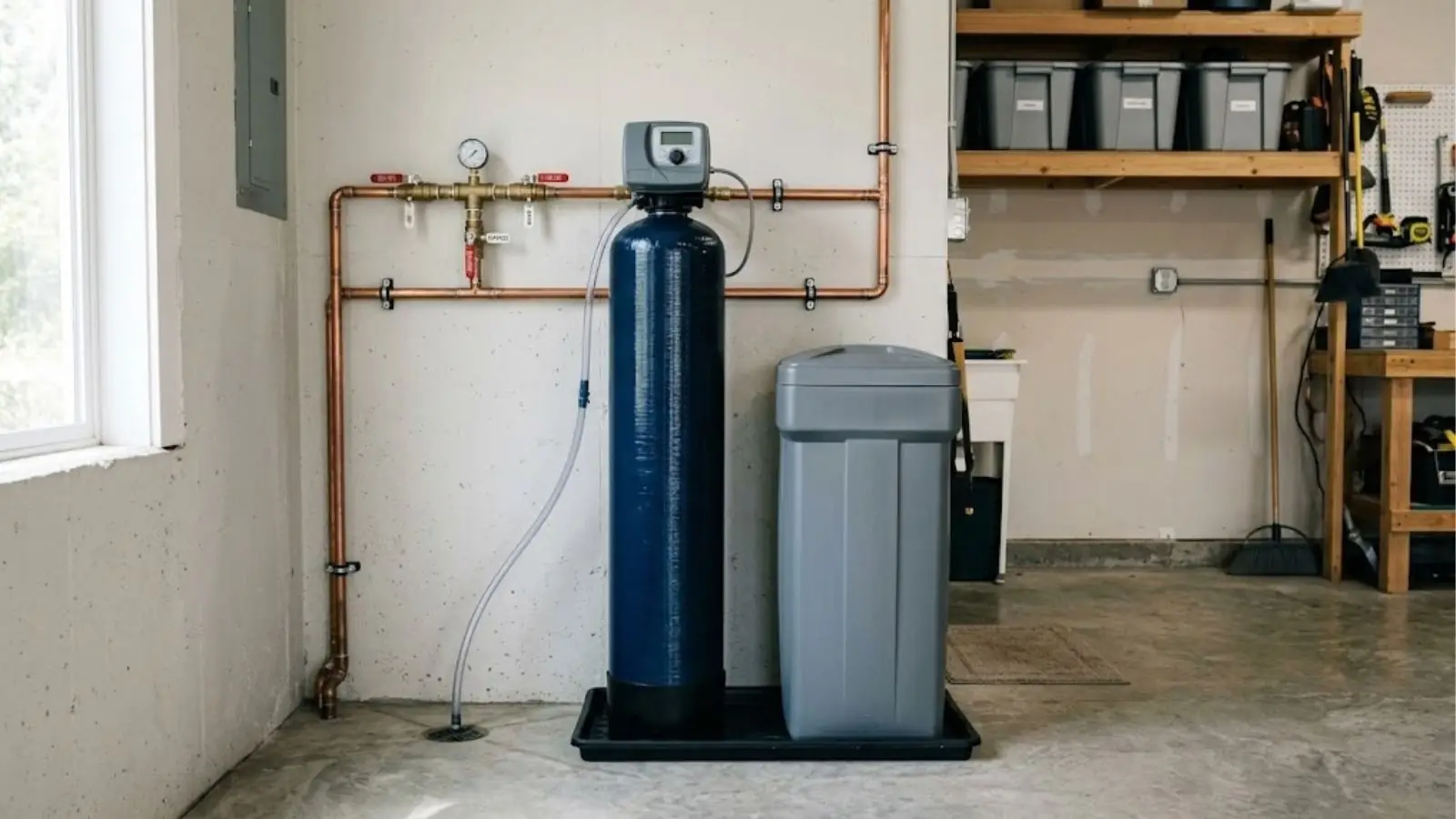
A garage is a common spot for a water softener, and it works when the unit is near the main line, has a drain and an outlet and is protected from freezing. A garage that dips below freezing needs insulation or heat tape on the plumbing and the unit, because ice can crack a softener's valve or tank.
Before you install, confirm you need one. Union County Water reported very soft water at 23 ppm average hardness in its 2023 report. Our companion guide on softeners and filters explains how to check your tap, and the plumbing installation page covers the work itself.
What a garage install needs
Access to the main line
The unit connects where the main water line enters, before the water heater.
A floor drain or standpipe
The softener discharges backwash and brine, and it needs a legal drain.
A power outlet
The control head needs power, ideally a protected outlet.
Floor space and a level base
A full brine tank is heavy and must sit on a solid level surface.
Freeze protection
Insulation or heat on the unit and the lines in cold weather.
The plumbing steps
Choose the spot
Place the unit near the line and a drain, away from where cars can hit it.
Cut in the bypass
Install a three-valve bypass so you can service the unit without losing water.
Run the drain
Use an air gap on the drain line, a gap that prevents sewage from backing into the unit.
Set the head
Program hardness, capacity and regeneration time.
Test
Check each joint, regenerate once and confirm the water is soft.
An air gap on the drain is a small detail that protects the unit and your water. Never connect the drain line directly to a sewer pipe.
Freezes and the garage
| Condition | Risk | Fix |
|---|---|---|
| Unheated garage | Freeze cracks the valve or tank | Insulate, add heat tape or choose another place |
| Exterior wall mount | Cold wall transfers freezing | Keep the unit off the exterior wall |
| Water in lines exposed to cold | Splits pipe | Insulate and let a faucet drip on hard freeze nights |
Local note: freezes, hardness and drain rules
What Union County conditions mean for the install
Union County sits in the North Carolina Piedmont, where winter swings between mild days and hard overnight freezes. A garage that is warm in November can drop below freezing in January, so plan for cold.
Union County Water's 2023 report listed average hardness of 23 ppm, so many homes may not need a softener at all. Test your tap first. Union County Building Code Enforcement says a permit is needed for the addition or change in design of plumbing, so ask whether a new main line connection counts, and ask your utility about rules on discharging brine.
For a home near the county seat, our Monroe plumber page covers coverage, and the service areas page lists other places we serve.
A smarter first step
Do a hardness test. If the result is low, you may save the cost of a softener and the hassle of hauling salt. If the result is high, you can install knowing it is worth it.
Layout and clearances
Plan the unit and the brine tank so you can reach the control head, add salt and service the bypass without moving anything. Leave room for a hose to reach the drain. If the garage doubles as storage, keep boxes off the unit and away from the brine tank, where moisture can damage them.
A softener's weight surprises people. A brine tank full of salt and water is heavy, so place it on a level slab or a sturdy pad. A unit that tilts leaks, and a leak in a garage can go unnoticed for a long time.
Protecting the unit from cold and cars
Garages swing in temperature, and softener valves contain small plastic parts that crack when ice forms. If the garage dips below freezing, wrap the plumbing, insulate the unit and think about a small heater rated for the space. Or put the unit in a conditioned space and run longer lines.
Cars and bikes bump equipment. A simple bollard or a spot against a back wall keeps the unit safe. Do not place it where a door swing or a vehicle path will hit it.
Choosing salt and settings
Use the salt type the maker recommends, usually pellets or crystals. Check the brine tank every month and refill when it gets low. Set the hardness value to your actual water test, not a guess, so the unit regenerates only as often as it needs to.
Our plumbing installation page explains how a plumber ties a unit into the main line. If your test shows that you do not need a softener, you can skip the whole project and save the upkeep.
Sources behind this guide
Drain connections for softeners follow the State Plumbing Code, which adopts the International Plumbing Code (IPC), including an air gap. Hardness figures come from the Union County Water 2023 report. Look for products certified to NSF and ANSI standards.
Garage softener questions
Can a water softener freeze in a garage?
Yes, in hard freezes. Insulation or a heated space prevents cracked valves and tanks.
Where does the softener drain?
To a floor drain or standpipe with an air gap. It must not connect directly to a sewer pipe.
Do I need a softener with Union County Water?
Its 2023 report listed 23 ppm hardness, which is very soft. Test your tap before buying.
Does a garage softener need power?
Yes, for the control head. Use a protected outlet.
Do I need a permit?
A change in plumbing may need one in Union County. Confirm with Building Code Enforcement.