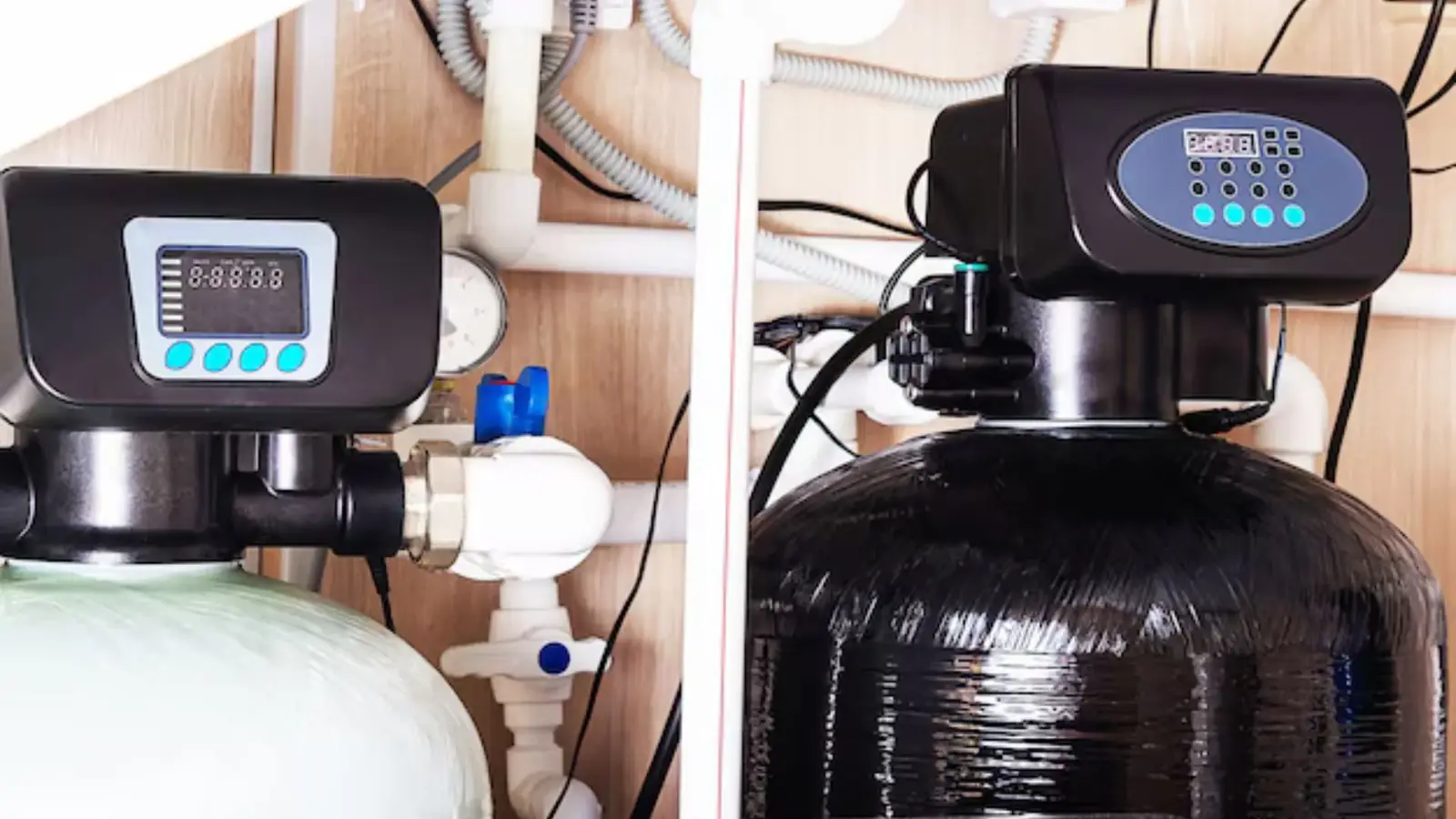
A water softener removes hardness minerals by ion exchange, and a filter removes sediment, chlorine taste or other contaminants. The first question is whether you need either. Union County Water reported average hardness of 23 ppm in its 2023 water quality report, which is very soft, so most Indian Trail homes on that supply do not need a softener.
That changes how you should shop. A filter for taste or chloramine can make sense, while a softener may add cost and salt without a real benefit. This guide explains both and what the installation involves.
Check your hardness first
Water at or under about 60 ppm is generally considered soft. The utility's report gives a system average, and a home test kit or a lab test gives your tap's number. If the number is low, spending on a softener is mostly wasted.
| Hardness | Description | Softener needed |
|---|---|---|
| 0 to 60 ppm | Soft | Rarely |
| 61 to 120 ppm | Moderately hard | Sometimes |
| 121 to 180 ppm | Hard | Often |
| Over 180 ppm | Very hard | Usually |
What a filter can do here
Union County Water's report lists chloramine as its final disinfectant. Some people dislike the taste or smell and install a filter. Chloramine is harder to remove than plain chlorine, and many carbon filters are not rated for it, so look for a filter that lists chloramine reduction and follow its change schedule.
Sediment filter
Catches sand and rust particles and protects fixtures.
Carbon filter
Reduces taste and odor. Choose one rated for chloramine if that is the goal.
Whole house filter
Treats every tap. Needs adequate flow and regular cartridge changes.
Under-sink filter
Treats drinking water at one tap and is easy to install.
How an installation works
Pick the location
A softener or whole house filter goes where the main line enters the house, with a drain nearby.
Plumb in with a bypass
Shutoff and bypass valves let you service the unit without losing water.
Connect the drain and power
A softener needs a drain line and an outlet. A filter needs neither.
Set up and test
Program the softener, flush the system and check for leaks.
Local note: what the utility report and the code say
Union County Water's report and permit rules
Union County Water's 2023 water quality report listed average hardness of 23 ppm and an average pH of 7.11, with chloramine as the final disinfectant. A small part of Indian Trail may be served by another utility, so check the report for your own street.
Union County Building Code Enforcement says a permit is needed for the addition or change in design of plumbing. A simple filter swap is minor, and a new whole-house installation with new piping may count as a change. Ask the county if you are unsure. Also ask your utility about discharge rules for softener brine.
Our Monroe plumber page covers the county seat. The City of Monroe's FY2023 report does not list hardness, so Monroe homeowners should ask the water office or test the tap. See the service areas page for other towns.
When a softener does make sense
If a test shows hardness well above the soft range, or if you see heavy scale on fixtures, a softener helps. Choose a size by household use, set the regeneration to match and keep the salt full.
Sizing a system if you do need one
If a test shows hardness well above the soft range, size a softener by household water use and by the hardness number. A family of four with moderate hardness needs a smaller unit than a family of six with very hard water. An oversized unit regenerates less often but wastes salt, and an undersized one regenerates too often and wears sooner.
Whole house filters are sized by flow rate. A filter that restricts flow too much leaves showers weak, and one that is too large costs more than it should. A plumber can read the flow rate your plumbing needs and recommend a size.
Maintenance you sign up for
| System | What you do | How often |
|---|---|---|
| Salt softener | Add salt, check the brine tank | Monthly check, refill as needed |
| Whole house filter | Change cartridges | Per maker, often every few months |
| Under-sink filter | Change cartridge | Per maker, often twice a year |
| Carbon filter for chloramine | Change cartridge on schedule | Per maker, since spent carbon stops working |
Neglected filters do more harm than good. A cartridge left in too long can clog, reduce flow and grow bacteria. Set a reminder on the day you install the system, and keep the spare cartridges where you can find them.
Reading a water quality report
The report your utility publishes each year lists the source, the treatment, hardness where measured, pH and the results for regulated contaminants. It is written for the whole system, not your tap. If you want a number for your home, a lab test or a quality test kit gives it. Our plumbing installation page explains how a plumber can connect any treatment system you decide on.
Sources behind this guide
Softener and filter plumbing follows the State Plumbing Code, which adopts the International Plumbing Code (IPC), including the air gap requirement on drains. Hardness figures come from the Union County Water 2023 report. Product claims should come with independent test data according to NSF and ANSI standards, so ask the seller which certification a product holds.
Softener and filter questions
Do I need a water softener in Indian Trail?
Probably not on Union County Water supply. Its 2023 report listed 23 ppm average hardness. Test your tap to be sure.
Will a filter remove chloramine?
Only filters rated for chloramine do. Check the label.
Can a softener make my water taste salty?
A correctly set softener adds a small amount of sodium. If you notice a salty taste, have it checked.
Where should the unit be installed?
On the main line before the water heater, near a drain and a power outlet.
How often should I change filter cartridges?
Follow the maker's schedule. Overused cartridges stop working and can clog.