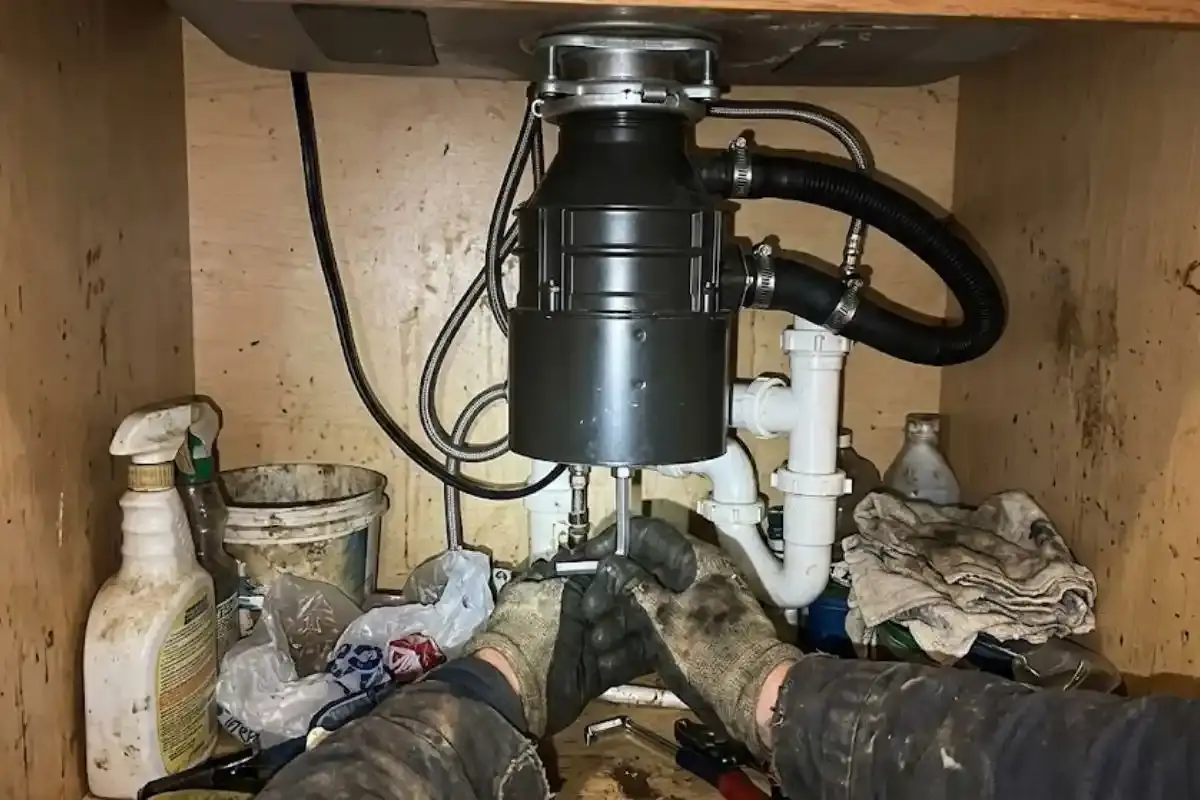
A garbage disposal installation looks simple, but it connects to the sink drain, the dishwasher drain and an electrical supply. A mistake leaks into the cabinet or trips a breaker. A handyman can do it well when the connections are straightforward, and a licensed plumber is the safer choice when the drain or the power needs changes.
This guide covers what the job involves, what to ask and when a plumber is the right call. For a failed unit that needs repair, see our garbage disposal repair page.
What the job involves
Disconnect the old unit
Shut off power, loosen the mounting ring and disconnect the drain and dishwasher line.
Prepare the sink flange
Clean the sink opening and install the new flange with plumber's putty and the mounting hardware.
Mount the disposal
Attach the unit to the mounting assembly and seat it securely.
Connect drains and power
Reconnect the discharge and dishwasher hose and the electrical supply.
Test
Run water, check every joint for leaks and test the unit.
Where things go wrong
Leak at the flange
Putty or the gasket not seated. Water drips into the cabinet.
Dishwasher drain not opened
The knockout plug is left in, and the dishwasher cannot drain.
Wrong power connection
A loose or reversed wire, or a missing cord strain relief.
Poor drain slope
The discharge pipe does not slope to the trap, and water sits in the unit.
Backups in the sink
A partial blockage in the drain line the disposal cannot fix.
The dishwasher knockout is the classic miss. The disposal ships with a plug in the dishwasher inlet, and it must be knocked out before the hose is attached. Forgetting it leaves the dishwasher draining into the sink poorly or not at all.
Handyman or licensed plumber
| Situation | Handyman may be fine | Plumber recommended |
|---|---|---|
| Replacing like with like | Yes, if comfortable with power | Also fine |
| New disposal where none existed | Rarely | Yes, drain and power change |
| Hardwired unit | Only with a licensed electrician | Plumber with electrical help |
| Old or damaged drain pipes | No | Yes |
| Dishwasher connection changes | Maybe | Yes |
Local note: permits and licensing in Union County
Union County permit rules and the NC licensing board
Union County Building Code Enforcement says a permit is needed for the addition or change in design of plumbing, heating, air conditioning and electrical wiring, and lists exemptions for like-for-like replacement of fixtures and for minor work under a set cost. A straight swap of a disposal usually falls under the replacement exemption, while a new disposal with new wiring or a changed drain may not.
In North Carolina, plumbing contractors are licensed by the State Board of Examiners of Plumbing, Heating and Fire Sprinkler Contractors. You can check a license through the board's public search at nclicensing.org or by calling 919-875-3612.
For homes near the county seat, our Monroe plumber page covers the area. The service areas page lists other towns we serve.
What to ask before you hire
- Is the person licensed, and can you verify it on the state board's search
- Does the quote include the new unit, the mounting, the drain parts and disposal of the old one
- Who handles the electrical connection
- What happens if the drain line is clogged or damaged
- Is there a warranty on the work
Choosing a disposal that fits your kitchen
Disposals vary in motor size, grind stages and noise. A one-third horsepower unit handles light use, while a three-quarter or one horsepower unit copes with more and runs quieter. Larger motors cost more and weigh more, which matters for the mounting. Check that the unit fits under your sink with the trap and the dishwasher hose, because some models are tall.
| Household | Typical choice | Reason |
|---|---|---|
| One or two people, light cooking | Smaller motor | Lower cost, enough for scraps |
| Family of four, daily cooking | Mid-size motor | Better grinding and less jamming |
| Heavy use or frequent entertaining | Larger motor | More power and quieter operation |
Hardwired or plug-in
Many disposals are installed with a cord that plugs into an outlet under the sink. Others are hardwired to a switch. A plug-in is simpler for a replacement, since the outlet already exists. Hardwired connections should be done by a licensed electrician or a plumber who is qualified for the work. Never leave live wires exposed in the cabinet.
Care after the install
A disposal lasts longer with a little habit. Run cold water before, during and for a few seconds after grinding. Feed scraps gradually and avoid grease, stringy fibers in bulk, coffee grounds in large amounts and anything that is not food. Grind a few ice cubes now and then if you like, but do not rely on that to clean it.
If the sink backs up after you install a disposal, the cause is often a partly clogged drain line past the unit. Our drain cleaning page explains how a plumber clears it.
Codes and sources behind this guide
Disposal drains and traps follow the State Plumbing Code, which adopts the International Plumbing Code (IPC). Wiring follows the National Electrical Code (NEC). Union County Building Code Enforcement's residential page lists the permit exemptions for like-for-like replacement.
Disposal installation questions
How long does a disposal installation take?
A like-for-like swap often takes about an hour or two. A new install with new power and drains takes longer.
Do I need a plumber or can a handyman do it?
For a simple swap a handyman can do it. For new wiring, drain changes or a dishwasher hookup, use a licensed plumber and electrician as needed.
Does Union County require a permit for a disposal?
A like-for-like replacement is generally exempt, but new wiring or a design change may need a permit. Confirm with the county.
Is a bigger disposal worth it?
A larger motor handles more and runs quieter, but it must fit your sink and your budget.
What if my sink keeps backing up after installation?
The clog is likely in the drain line past the disposal, and a plumber can clear it.